

Quick Answer
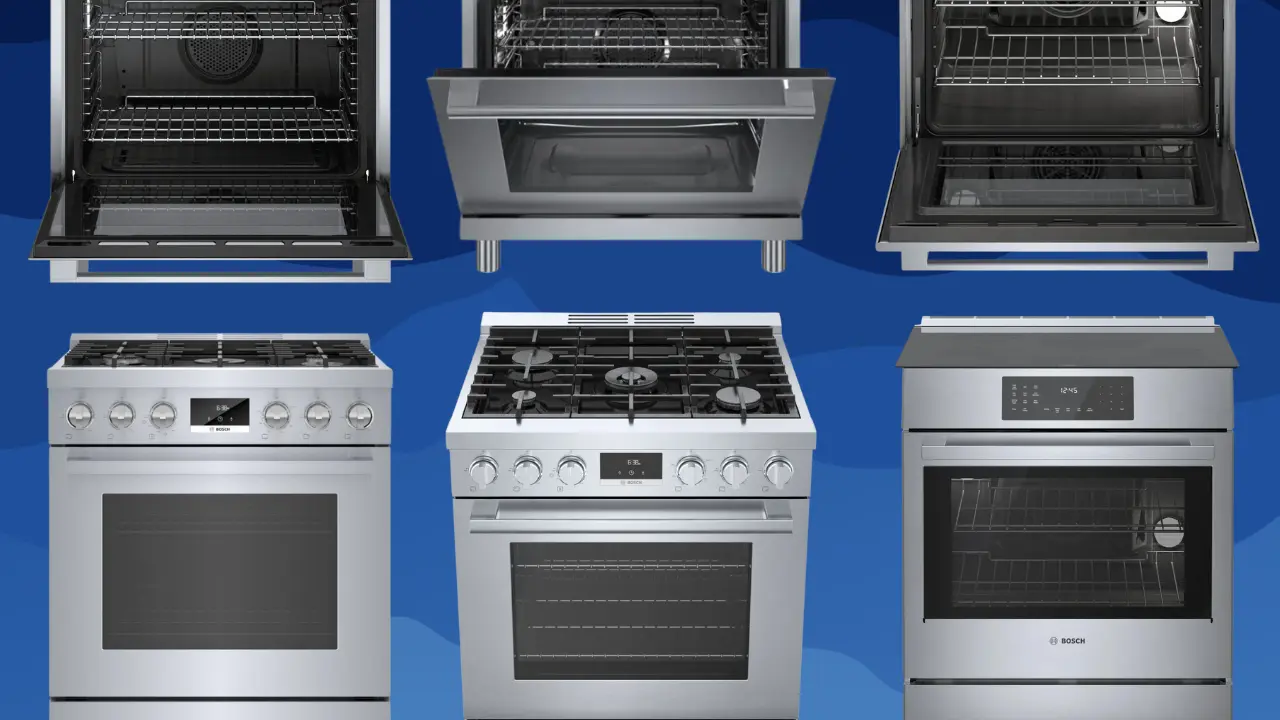
Bosch’s 2026 range lineup splits into two decisions: gas or induction, and slide-in or freestanding pro-style. We’ve installed and tested the HGS8055UC, HII8057U, and HIS8055U in real kitchens. We also stock the HGI8056UC, a gas slide-in that shows up often in searches and carries the deepest discount in the lineup right now, though we haven’t put it through our own hands-on testing yet.
Here’s how the four models stack up on price and fit:
| Model | Type | Best For | Price |
|---|---|---|---|
| HGI8056UC | Gas slide-in | Buyers who want true slide-in styling at the lowest price in this lineup | $2,030 (20% off $2,549 MSRP) |
| HGS8055UC | Gas freestanding, pro-style | Buyers who want the broiler and simmer performance we tested firsthand | $3,999 |
| HII8057U | Induction slide-in | Buyers who want induction speed in a slide-in body | $4,149 |
| HIS8055U | Induction freestanding, pro-style, knob controls | Buyers who want induction control without a touch panel | $5,399 |
Short version: the HGS8055UC is our top pick for gas cooking we’ve tested ourselves, the HII8057U is our top pick for induction in a slide-in, and the HGI8056UC is the value pick if slide-in gas at the lowest price matters more to you than hands-on testing from our team.
Our Hands-On Testing Approach
We set up each Bosch range in our warehouse kitchen. We boiled water, roasted vegetables, and baked batches of cookies. We did this to see how quickly each cooktop responded, how evenly the oven held its temperature, and how easy it was to switch between different heat settings. We also used an oven thermometer in several spots to check for consistent warmth across multiple racks.
We paid attention to basic routines, like simmering a delicate sauce or wiping down the cooktop after a spill. These everyday moments often matter just as much as a fancy dinner. We wanted to know if a range could bring water to a fast boil and hold a steady simmer for custards. We also checked how quickly the oven could preheat, since that can save time on busy nights.
Our warehouse tests led us to focus on five main areas:
- Performance
We looked at boil times, evenness of baking, and how well the cooktop handled highs and lows.
- Build Quality
We opened and closed the oven doors, checked the knobs, and moved cookware around to sense overall sturdiness.
- Ease of Use
We noted how intuitive the controls felt and whether cleaning the cooktop was simple.
- Features
We tested extra modes like convection or SpeedBoost on induction models to see if they truly made a difference.
- Value
We compared each range’s price to its performance and reliability data. This included feedback from customers and service records.
Some of these points overlap in real life. A gas burner might be powerful, but if the oven door feels flimsy, that still matters. We tried to capture a balanced picture by blending data from our tests with opinions from people who’ve lived with these ranges for months or years. That’s why we also reached out to our sales team and surveyed customers. Their anecdotes about daily routines added depth to our numbers.
What Makes Bosch Stand Out
We’ve tested many ranges over the years. Bosch has a way of blending reliable construction with thoughtful features. Even their entry-level models feel more solid than most mass-market appliances. We often see heavier doors, well-made knobs, and a clean, modern look that fits a range of kitchen styles.
Bosch’s Focus on Quality
Bosch has earned a reputation for ranges that last. Some of our customers mention keeping older Bosch units for 10 years or more with few repairs. Our service data supports this. We see fewer calls on Bosch compared to certain other premium brands. We can’t promise any appliance will be flawless, but Bosch’s dedication to strong engineering appears in details like oven hinges and sturdy grates.
Innovation and Design
Bosch doesn’t chase every flashy trend. Instead, we see them refine cooking technology that helps you save time or get more precise results. Their gas burners often include an extra-powerful center option. Their induction cooktops have SpeedBoost, which turns up the heat for a quicker boil. These features may not look as eye-catching on a spec sheet, but in our cooking tests they made everyday tasks faster and smoother.
From a design standpoint, Bosch leans toward sleek lines and minimal branding. They focus on stainless steel finishes, sometimes with black accents. Slide-in versions have front-mounted controls that blend with the countertop for a built-in feel. We hear from homeowners that this style looks upscale without feeling over-the-top.
Position in the Premium Market
Some kitchen pros see Bosch as a practical alternative to ultra-luxury names like Wolf or Miele. Bosch tends to be more affordable than those brands, yet it’s a step above a standard GE or Frigidaire range. We find that people shopping for brands like GE Café or KitchenAid often look at Bosch as well. It stands in that upper tier of quality and performance, but not so high-priced that it becomes a dream purchase only.
We’ve also noticed that Bosch has a broad lineup. Even if you want a simpler 500 Series model, you still get convection baking and a well-insulated oven. If you prefer a stronger burner or advanced induction, then the 800 or Benchmark series comes into play. This wide range of options helps Bosch appeal to cooks who want a professional feel at different budget levels.
Customer Confidence
Bosch’s reputation extends beyond our warehouse tests. Customer feedback and our service notes give buyers more confidence, especially if you’re not sure which premium brand to choose. We see many return customers who insist on sticking with Bosch for their next appliance upgrade.
It’s the mix of sturdy build, cooking precision, and a trusted name that draws people to Bosch. This brand identity is strong in our industry, and it’s what gave us plenty to talk about when we started examining each series in detail.
How the Bosch Range Lineup Is Organized
Bosch offers gas, induction, and dual-fuel choices in different price tiers. We often point people toward the 500 Series if they’re watching costs but still want a durable range. The 800 Series adds more burner power, self-cleaning features, and a refined look that many consider a sweet spot. Benchmark is where Bosch goes all out, with extra cooking modes and premium materials that feel closer to luxury brands.
100 & 500 Series
We’ve noticed that the 100 & 500 Series delivers a strong mix of quality and affordability. Even at this level, Bosch includes European Convection for even baking and at least one high-output burner on gas models. A typical 500 Series gas range might have sealed burners, a durable stainless body, and a convection oven that holds steady temperatures. It’s a simpler platform with fewer electronics, which can mean fewer issues over time.
Our team often suggests the 100 or 500 Series to people who want Bosch standard Bosch reliability. Some 500 Series models don’t have the soft-close oven door or Wi-Fi integration, but they give you a dependable cooking experience. Prices can hover around $1,800 to $2,500, depending on fuel type and features.
800 Series
Most of our customers who choose Bosch end up in the 800 Series. These ranges feel more robust with upgraded burners, self-clean cycles, warming drawers, and SpeedBoost on induction cooktops. We see a noticeable jump in power, like an 18,000 BTU gas burner or higher wattage induction elements. This often leads to faster boil times and better searing.
Ovens in the 800 Series have advanced convection settings. They tend to heat quickly and distribute warmth evenly. We found that cookies baked in the 800 Series showed almost no hot spots, even when we used two racks at once. The design also feels more modern, with hidden elements and smoother interfaces. Expect pricing from about $2,400 up to $6,000+, depending on whether you pick gas, induction, or dual fuel, surpassing even models in the Benchmark series.
Benchmark Series
Benchmark is Bosch’s top tier. We see the most powerful burners here, along with FlexInduction zones on certain induction models. The oven doors usually have a quiet-close mechanism, and you can find built-in temperature probes that let you monitor roasts without opening the door. Benchmark models also come with features like a second interior oven light and easy-glide racks.
This is where Bosch packs in extra oven modes, like settings for proofing dough or dehydrating fruit. We can’t say everyone needs these functions, but serious cooks appreciate having the option. Benchmark models sit in a higher price range, starting around $3,500 and going up to $6,000+ or so for dual-fuel versions, matching and exceeding models in the 800 series. If you want peak Bosch performance with the most cooking flexibility, Benchmark might be worth the extra cost.
Which Series Fits Your Style
All Bosch ranges share core values of even cooking and solid construction. Moving from 500 to Benchmark layers on additional power, convenience, and a more polished design. Those who cook a lot or want something that feels truly pro-level often lean toward the 800 or Benchmark lines. People who mostly need dependable burners and a trustworthy oven can start at the 500 Series and still get the Bosch quality we see across the brand.
Deciding Between Gas, Induction, or Dual-Fuel
We often hear customers ask which fuel type will serve them best. Each approach has its perks. Gas offers direct flame control, induction provides quick heating and a cool-to-the-touch surface, and dual-fuel combines a gas cooktop with an electric oven.
Gas for Instant Flame
Many home cooks enjoy the natural feel of a real flame. Gas burners respond fast when raising or lowering heat, and it’s easier to judge warmth by looking at the flame size. We’ve found that Bosch gas cooktops offer solid power across all burners, with at least one high-BTU option for searing or boiling. We also like how Bosch gas models handle gentle simmers without scorching sauces.
Gas ranges do need a proper gas line, and ventilation is important if you cook often at high temperatures. Some people say gas can run a bit hotter in summer, which might matter if you live in a warm climate and want to keep your kitchen cooler.
Induction for Efficiency and Speed
Induction ranges heat pots and pans with electromagnetic energy. We’ve seen how fast water reaches a boil on Bosch induction units, thanks to SpeedBoost. This technology ramps up the power to heat large pots faster than most gas burners. We also appreciate the easy cleanup. Spills tend not to bake onto the glass surface because the cooktop itself doesn’t get as hot as a typical electric unit.
Induction does require cookware that’s magnetic. If you have cast iron or many stainless steel pans, you’re probably set. If you prefer copper or aluminum, you may need to switch. Bosch induction ranges can display error codes if spills touch the touch panel, but it’s not a big problem if you wipe up moisture quickly. For families with young kids, the cooktop’s cool surface can add peace of mind.
Dual-Fuel for the Best of Both Worlds
Dual-fuel ranges combine a gas cooktop with an electric oven. Many bakers love electric ovens for their even heat, and Bosch’s convection system helps maintain steady temperatures for bread or pastries. Meanwhile, having gas up top lets you keep that familiar flame for boiling, frying, or sautéing.
Dual-fuel models do cost more and need both a gas line and a 240V electrical connection. If you bake often and enjoy the precision of gas burners, though, dual-fuel can be worth the upgrade. Bosch’s dual-fuel ranges appear mostly in the 800 and Benchmark lines, which means you get other premium perks, like sturdy racks and a warming drawer.
Which Fuel Type Suits You
We see beginners favor the simplicity of gas or the clean convenience of induction. Experienced cooks who crave the control of gas and the evenness of an electric oven often pick dual-fuel. Bosch has strong options in all three categories. Your choice might hinge on kitchen setup, budget, and cooking style. If you already have a gas line, that can be the easiest path. If you want fast heat, easier cleanup, and no open flame, induction could be ideal. If you’re ready to invest in an all-rounder, dual-fuel blends both. We like that Bosch gives you several routes to cooking satisfaction.
Common Bosch Range Problems to Know Before You Buy
No range is perfect, and Bosch’s are no exception. Here’s what we’d want you to know going in.
Smaller oven capacity on pro-style models. The HGS8055UC and HIS8055U trade some oven cubic footage for their pro-style stance and stacked front controls. If you regularly cook multiple large dishes at once, compare your current oven’s interior dimensions against these models before you buy.
No visible oven temperature display. Bosch tucks the oven temperature readout behind the control panel on several models rather than showing it up front. You can still check it, but it won’t be sitting in plain view the way it is on some other ranges. Buyers used to a constant number on display will need a short adjustment period.
Induction touch panels can act up around spills. The HII8057U and HIS8055U use touch controls for the cooktop. A wet finger or a boil-over near the panel can register a false touch or throw an error code. Wiping the panel dry before you touch it prevents most of this, but it’s worth knowing before day one.
Grates are heavy and show smudges. On the gas models, the cast iron grates are substantial, which helps with pot stability but means a two-hand lift when you’re cleaning underneath. The stainless surfaces around them pick up fingerprints and water spots quickly, so plan on wiping them down after regular use.
Pricing and availability shift. Bosch adjusts pricing and runs promotions throughout the year, and stock on specific finishes can tighten around holidays. The prices in this guide reflect what we’re seeing right now. Confirm current pricing on the product page before you check out.
Our Picks for the Best Bosch Ranges
We often get asked which Bosch ranges truly stand out. For 2026, we would split the answer into four buyer paths: value gas slide-in, tested pro-style gas, slide-in induction, and freestanding induction with knobs. We’ve tested the HGS8055UC, HII8057U, and HIS8055U ourselves. We also stock the HGI8056UC, which deserves a spot because it gives Bosch gas buyers a true slide-in option at the lowest current price in this guide.
Bosch 800 Series 30″ Slide-In Gas Range (HGI8056UC)
Price: $2,030 (20.4% off $2,549 MSRP)
The HGI8056UC is the model buyers search for most when they want a true slide-in gas range from Bosch, and it’s the one we stock at the deepest discount in this lineup. We haven’t run this specific unit through our own hands-on testing the way we have with the HGS8055UC, HII8057U, and HIS8055U below, so we can’t speak to its day-to-day performance from firsthand use.
What we can tell you: it carries Bosch’s 800 Series build and the slide-in fit that sits flush against your counters, at a price that undercuts every other model in this guide by a wide margin. If gas cooking and slide-in styling are your priorities and the lowest price point we offer matters most, this is the one to look at. If you want our own tested take on Bosch’s gas performance, the HGS8055UC below is the model we’ve actually installed and run through its paces.
Bosch 800 Series 30″ Freestanding Gas Range, Pro-Style (HGS8055UC)

- Current Masters Price: $3,999.00
Why This Model Stands Out
We’ve installed and tested the HGS8055UC in our warehouse kitchen, and it consistently ranks as our best pro-style Bosch gas range for home cooks seeking a freestanding, pro-inspired look and serious burner power. It features five sealed burners, including a center burner that hits 18,000 BTU, enough to rapidly boil large pots of water or sear a stir-fry in record time. In side-by-side boil tests against a standard 12,000 BTU burner, we shaved off several minutes to reach a rolling boil.
The cooktop layout impressed us with its spacious, continuous cast-iron grates. We could easily slide heavy pans without lifting them. The industrial-style design is another plus: the front panel and weighted metal knobs create a premium feel.
The oven capacity is 3.7 cubic feet, smaller than some 30-inch competitors, but it includes European Convection. In our cookie test, the top and bottom racks showed minimal browning differences, proving the oven’s even heat distribution.

Noteworthy Features
- Industrial Design and Knob Quality
Bosch went for a professional aesthetic here, and the die-cast knobs have a sturdy, weighted feel. The bold front panel adds to the pro-style vibe.
- Catalytic Clean
The oven walls have a coating that helps break down grease during normal cooking. Heavier messes may still need manual scrubbing, but day-to-day splatters are easier to manage.
- Convection Consistency
We roasted a whole chicken, and the convection mode delivered crispy, evenly browned skin.
- Gentle-Close Door
The oven door closes smoothly, which enhances that high-end feel and prevents slamming.
Real-World Impressions
Beyond the burner power, we appreciated that the control panel keeps a minimalist look, though it requires a button press to see the current oven temperature. Some owners prefer a constant readout, but Bosch prioritizes a clean interface here.
The HGS8055UC is currently $3,999.00 at Masters Wholesale. If you can live with a slightly smaller oven cavity and no Wi-Fi connectivity, you get a rugged, industrial-style design that handles everyday cooking with ease. For gas buyers who want our tested pro-style pick, this model is still hard to beat. If price and slide-in fit matter more, compare it against the HGI8056UC above.
Best Bosch Slide-In Induction Range: Bosch 800 Series HII8057U

- Current Masters Price: $4,149.00
Why This Model Stands Out
The HII8057U is our pick for the best Bosch induction range if you want a sleek, slide-in design. We’ve tested it in our facility, and the standout feature is how fast it boils water using SpeedBoost. Two of its four induction zones reach around 3,600 to 3,700 W, allowing us to bring a large pasta pot to a rolling boil in just a couple of minutes.
Its oven is 4.6 cubic feet, a comfortable size for family meals or holiday baking. Bosch includes true European Convection, which we confirmed by baking multiple sheets of cookies with even browning results. We also like that it offers a high-heat self-clean cycle, a step up from the catalytic approach found in some Bosch gas models.
Noteworthy Features
- Powerful Induction Cooktop
Induction responds immediately to power adjustments. We melted chocolate without scorching and later cranked the heat for a quick sear on steak.
- Slide-In Aesthetics
The front touch controls and flush fit give your kitchen a built-in, modern vibe. If you’re aiming for a seamless countertop look, this design is ideal.
- Warming Drawer
The drawer beneath the oven keeps side dishes or plates warm, which is invaluable for entertaining.
- Self-Clean Mode
We tried the three-hour setting on light spills, and it reduced our cleanup time considerably, though you’ll still want to wipe up large messes beforehand.
Real-World Impressions
The HII8057U is relatively quiet for an induction range; while the cooling fans run, they’re notably less noisy than some competitors we’ve tested. A small number of owners have reported error codes related to spills on the touch panel, but we personally found that a quick wipe prevents any interface glitches.
At Masters Wholesale, it’s currently $4,149.00. It is still a premium pick, but it delivers quick induction response, consistent baking performance, and a high-end slide-in look.
Best Bosch Freestanding Induction Range: Bosch 800 Series HIS8055U

- Current Masters Price: $5,399.00
Why This Model Stands Out
For cooks who want induction but prefer physical knobs, and a freestanding format, the HIS8055U fills a unique niche. Most induction ranges use touch controls, but Bosch mimics the experience of gas by giving you five knobs (four for the burners, one for the oven). This layout feels intuitive if you’re used to turning a dial to adjust heat.
We tried its induction zones with large pasta pots and found similar boil times to the slide-in model, thanks to two elements that boost up to 3,700 W.
However, the oven capacity is 3.9 cubic feet, which is smaller than what you get in the HII8057U. It still uses true convection, and we confirmed even roasting performance in our test batches of vegetables.
Noteworthy Features
- Knob-Based Controls
Adjusting induction power feels more traditional, bridging the gap for those hesitant to switch from gas. While the knobs are still electronic inputs, the tactile twist is refreshing.
- Freestanding with Finished Sides
You can slide it into any standard range slot without modifying countertops, unlike a slide-in design that requires a precise fit.
- Self-Clean Cycle
Despite the smaller oven space, you still get a high-heat self-clean option to tackle grease and spills.
- Storage Drawer
Note that this is a storage drawer, not a warming drawer, so it’s strictly for pans or trays.
Real-World Impressions
We see the HIS8055U as the best Bosch range for anyone wanting induction’s efficiency without giving up the familiar feel of turning a knob. The industrial aesthetic suits kitchens where a pro-style statement piece is welcome. Priced at $5,399.00, it costs more than the slide-in HII8057U. For buyers who dislike touchscreens and need a freestanding layout, the extra expense may still make sense.
Early feedback from customers has been positive. Our only caveat is that 3.9 cubic feet can feel tight for larger roasts or multi-rack baking, so plan accordingly if you frequently host large gatherings.
Why These Models Qualify as the “Best Bosch Ranges”
These four Bosch 800 Series ranges show why Bosch stays on many premium-range shortlists: sturdy build, clean design, and clear choices by fuel type and installation style. We’ve done side-by-side tests in our warehouse and monitored feedback from real-world owners, and here’s what makes each one worth considering:
- HGI8056UC (Gas Slide-In) is the value gas pick, with true slide-in styling and the lowest current price in this guide.
- HGS8055UC (Gas) delivers a professional-style look, fast boiling on its 18,000 BTU center burner, and solid convection baking.
- HII8057U (Slide-In Induction) combines lightning-quick SpeedBoost burners, a spacious 4.6 cubic foot oven, and a sleek flush installation that modern kitchens love.
- HIS8055U (Freestanding Induction) offers knob-based controls with the power of induction, plus easy installation for a standard freestanding slot.
These models share Bosch’s hallmark build quality, even cooking, and refined aesthetics. If you’re choosing between gas or induction, and deciding on slide-in vs. freestanding, each of these “best Bosch ranges” has a track record of satisfying both everyday home cooks and ambitious chefs alike. Given their current sale prices, they also offer strong value in the premium range category. If top performance and longevity are priorities, any one of these units can transform your kitchen routine.
These Bosch 800 Series models aim at different cooking styles. The HGI8056UC fits buyers who want value and a true gas slide-in. The HGS8055UC satisfies those who crave a tested pro-style gas range. The HII8057U appeals to those who love induction’s speed and want a flush slide-in design. The HIS8055U brings the pro-style look to freestanding induction, along with the comfort of turning physical knobs.
All three carry Bosch’s signature approach to build quality and the brand’s emphasis on even cooking. We see some differences in oven size, self-clean methods, and control interfaces, but each range aligns with the performance expectations we’ve come to associate with Bosch. Prices vary across these models, so budget can be a deciding factor as well. If you’re leaning toward a specific fuel type, it’s wise to spend a little time understanding how you prefer to cook, how much space you need, and whether you see value in features like a warming drawer or an extra-quiet convection fan.
Runner-Up Bosch Ranges and Why They Didn’t Make Our Top Picks
Not every Bosch series or model fits neatly into a “top pick” category. Below, we highlight a few additional Bosch options, explain their typical advantages, and clarify why we did not choose them as best-in-class. We also address some important notes on availability and pricing, including why you may see select 800 Series models listed above $6,000, sometimes rivaling or surpassing certain Benchmark models.
Bosch 100 Series
Bosch’s 100 Series is an entry-level line that typically prioritizes affordability and basic functionality. It’s harder to find comprehensive information on these models because Bosch does not emphasize them in promotional materials. Compared to the 800 Series or Benchmark lines, the 100 Series usually lacks key features such as true European Convection, upgraded racks, and high-BTU burners or SpeedBoost induction zones. While the 100 Series can be suitable if you need a simple, no-frills range at a lower price, our testing and customer feedback consistently show that Bosch’s true strengths, like powerful burners, robust convection, and advanced build quality, are better showcased in the 800 Series and above.
Why it isn’t a Top Pick:
The 100 Series ranges simply don’t match the performance, capacity, and extra features found in higher Bosch tiers. They’re serviceable entry-level appliances but don’t deliver the hallmark Bosch experience that most shoppers are seeking.
Bosch 500 Series
The 500 Series used to be Bosch’s mid-tier lineup, offering a nice balance of convection ovens, decent burner power, and good reliability at a lower price than the 800 Series. However, Bosch has begun phasing out the 500 Series ranges from its official site, and they’re now primarily available through select retailers. While 500 Series models are still solidly built, they may be missing newer innovations (like Wi-Fi connectivity, FlexInduction, or upgraded self-clean systems) that have become standard on many 800 Series units.
Why it isn’t a Top Pick:
Availability has declined, and features on the 500 Series can be overshadowed by what’s offered in the 800 Series. Because Bosch is not actively promoting or updating these models, buyers looking for long-term support or the newest technology may find better solutions in the 800 Series or Benchmark lines.
Important Note on 800 Series Pricing
In our top picks above, you’ll see typical 800 Series models in the $3,000–$4,500 range. However, it is possible to find select 800 Series units, often 36-inch options or advanced induction configurations, that retail above $6,000. In some cases, these can exceed the price of certain Benchmark models. The higher-end 800 Series units may come with specialized features (like extra cooking modes or more powerful induction zones) and larger capacity, driving up the cost.
Why this Doesn’t Affect Our Top Picks:
Our best picks focused on 30-inch 800 Series models that offer the classic combination of performance and price. We did not include the pricier 800 Series ranges (those over $6,000) because they target a niche market (such as larger kitchens needing a 36-inch footprint). For most buyers seeking a standard 30-inch range, the mid-priced 800 Series remains the sweet spot.
Final Thoughts on Runner-Ups
The 100 Series is an entry-level range collection with basic features. The 500 Series is now more niche, as Bosch has directed attention to its newer or more feature-packed lineups. Meanwhile, some premium 800 Series offerings can price out higher than certain Benchmark models, but this generally applies to large-format or specialized induction units. If you find a 500 Series at a good discount, or prefer a minimal-feature 100 Series, either can work for simpler cooking needs. But for the majority of shoppers wanting a modern, well-featured Bosch range, the 800 Series (or Benchmark) remains a more compelling choice overall.
What Owners Are Saying: Real-Life Bosch Range Reviews
We’ve combed through hundreds of Bosch range reviews from major retailers, online forums, and direct customer feedback in our own showroom. The general consensus is that Bosch delivers steady performance and a refined look. Owners often mention how smooth their cooking experiences have been, citing fast heating times and reliable baking. There are also a few recurring critiques, which we’ll detail as well. Here’s a blend of actual user quotes and sentiments we hear regularly from our own customers.
Good Reviews for Cooking Performance
Many owners prefer Bosch gas ranges for powerful burners that easily match professional needs. One user wrote, “The 18,000 BTU center burner feels like having a mini restaurant in my home. I can boil pasta water in minutes, and it’s fantastic for stir-frying.” That lines up with our own tests, where we found the HGS8055UC could handle large stockpots and high-heat searing with minimal effort.
Induction fans speak just as enthusiastically. In one review, we saw a customer say, “I barely have time to get ingredients out by the time a full pot of water boils.” Another user compared their previous induction cooktop to Bosch’s and said, “The Bosch is quieter and more precise. I thought induction was the same across brands, but this range changed my mind.” That sort of feedback mirrors what we’ve experienced in our warehouse, where the HII8057U boiled water almost too quickly for our usual morning oatmeal routine.
Even Baking and Convection Results
Bosch’s convection ovens draw a lot of love from bakers. One owner said, “My breads and cookies bake perfectly. I’ve tried multiple racks, and everything browns evenly without rotating pans.” We’ve seen similar results in our own cookie tests. Bosch’s combination of fan-forced air and a third heating element helps distribute heat throughout the oven, and that typically means fewer hot spots.
We also read multiple reviews that highlight how quietly the oven fan runs. A user who switched from another premium brand mentioned, “I can barely hear the convection fan on my Bosch compared to my old range. The kitchen feels calmer.” This observation matches our findings; while no oven is completely silent, Bosch fans are subdued enough that we usually forget they’re running.
Common Gripes and Quirks
Despite the generally positive tone, some reviews point out irritations that echo sentiments we’ve heard in our showroom. A few people dislike how the oven temperature doesn’t remain on the display. “I have to push a button every time I want to see the oven temp. It’s annoying,” one owner noted. We understand this frustration, especially for anyone who loves checking on preheat progress.
Induction owners occasionally talk about error codes. One user said, “The cooktop is fantastic when it works, but it shut off mid-boil once and flashed an E-code. A tech had to replace a small part.” In our records, we’ve seen fewer Bosch issues than some other brands, but advanced electronics can introduce glitches. Another user comment that pops up occasionally is about oven capacity on the pro-style ranges, such as, “I assumed a 30-inch model would be bigger inside. It’s fine for everyday meals, but I can’t fit my huge turkey roaster.”
Matching Our Own Customers’ Experiences
Our local customers often share the same highs and lows. People love how Bosch burners feel sturdy and how induction cooktops can melt chocolate without scorching. Some complain about the porcelain cooktop’s tendency to show smudges or the smaller oven size in industrial-style models. We haven’t heard many issues with major breakdowns, which suggests Bosch’s reliability reputation holds up. It’s mostly about day-to-day quirks, like cleanup or display preferences.
One longtime Bosch owner who upgraded this year mentioned, “I replaced my 12-year-old Bosch with a new 800 Series. It’s everything I loved before, but faster and quieter.” Another told us, “It was between a Bosch and a Samsung. I went with Bosch after reading better longevity reviews, and so far, it’s been worth the slight cost difference.” Both comments match the typical pattern: buyers who want consistent performance and minimal repair worries often choose Bosch.
Takeaways from Customer Reviews
The Bosch range reviews we see highlight powerful burners, dependable ovens, and a modern look that many people appreciate. A few interface gripes and occasional electronic issues pop up, but they don’t overshadow Bosch’s record of strong performance. This brand builds a lot of trust, with owners routinely mentioning years of trouble-free cooking. Hearing these stories helps us guide future shoppers, since firsthand accounts can reveal how a range truly behaves over time.
If you’re the type of cook who appreciates precise heat, whether that’s controlling a simmer on gas or taking advantage of induction’s speed, you’ll likely see Bosch as a solid investment. Just keep in mind that some models have smaller ovens or hidden temperature displays. Whether those details matter depends on what you prioritize in a kitchen. For many, the steady performance and polished design feel like a fair trade for minor quirks.
How Bosch Stacks Up Against Other Brands
We’re always asked how Bosch compares to other premium makers. GE has its Profile and Café lines, Samsung and LG offer feature-heavy options at competitive prices, and KitchenAid sits in a similar price band. Each brand has its own style, so here’s a look at what we’ve observed in our warehouse and what our customers often share.
Bosch vs. Samsung and LG
We tend to group Samsung and LG together because both are big tech players that lean heavily into smart features. Samsung offers advanced Wi-Fi integration, oven cameras in some models, and a split “Flex Duo” oven design in certain ranges. LG has also embraced app connectivity and introduced Air Fry settings.
Some owners choose Samsung or LG because they like the extra gadgets or prefer a certain color finish. When it comes to reliability, though, Bosch often appears stronger in service stats. We’ve read data from places like Yale Appliance showing that Samsung and LG induction models have a slightly higher service rate than Bosch induction. One of our customers who switched from a Samsung induction range commented, “It was feature-packed, but it broke twice in four years. My new Bosch has fewer flashy tricks, yet the cooking performance is more solid.” That sentiment appears fairly common, people sometimes find Samsung or LG appealing for the smart extras, then realize Bosch focuses on core cooking power and fewer hardware failures.
Bosch vs. GE Profile and Café
GE covers a wide range of prices, but Profile and Café aim at the same premium corner of the market as Bosch. GE Café stands out for its custom hardware finishes and stylish looks. We’ve had customers who want rose gold knobs or brushed bronze handles, something Bosch doesn’t offer. GE also includes modes like built-in air frying or specialized app features.
In terms of cooking performance, both Bosch and GE deliver strong results. We’ve tested GE Café models with a 21,000 BTU burner that can match or exceed Bosch’s top burner output. However, we hear more about fan noise or slight hot spots in some GE ovens. Bosch ovens tend to be quieter, and our cookie tests show very even browning. Reliability numbers from various service reports place Bosch near the top, though GE’s premium lines also do fairly well. People who prioritize brand aesthetics might go for GE Café if they want hardware customization, while Bosch appeals to those who prefer a sleek, minimal look and a track record of fewer service calls.
Bosch vs. KitchenAid
KitchenAid has built a name around heavy-duty cooking features, especially for people who bake. Some KitchenAid models include a second baking drawer or a steam rack. They sometimes come in at a lower cost than a comparable Bosch, which can attract customers on a tighter budget.
We often hear that Bosch’s build quality feels a bit more polished. KitchenAid’s gas burners sometimes beat Bosch in raw BTU numbers, but Bosch has more consistent simmer control across the board. A few KitchenAid owners have reported frustration with electronic components over time. Bosch’s induction reliability typically surpasses KitchenAid’s, at least in the data we’ve seen and in the calls we track. Still, KitchenAid is known for sturdy metal knobs and a style that fits traditional kitchens. If your heart is set on a brand that’s part of the Whirlpool family, KitchenAid might be tempting, but we see Bosch as a more consistent performer in the long run.
What Makes Bosch Different
Bosch invests heavily in engineering fundamentals. Where Samsung or LG might add multiple smart features, Bosch tends to refine cooking technology like induction speed or convection accuracy. That can mean fewer headline-grabbing extras, but from our perspective, it cuts down on extraneous parts that might break. Bosch also keeps design lines simple. Instead of multiple finishes or customizable knobs, you get a choice of stainless steel or black stainless in most ranges.
We also appreciate that Bosch’s induction models show lower service rates across several appliance studies. Induction cooking involves complex electronics, so there’s always a possibility of error codes, yet Bosch’s electronics rarely fail in that first year or two. Our own service team confirms that Bosch induction ranges come back less frequently for major repairs compared to some other premium brands.
Who Might Pick Bosch
If your dream range must include custom hardware or multiple color options, you might be happier with GE Café or another brand that excels in style choices. If you want advanced smartphone connectivity or a built-in camera, Samsung might catch your eye. On the other hand, if you’d rather focus on the essentials, like stable burner performance, a reliable oven, and fewer repairs, Bosch occupies that sweet spot. It’s a brand favored by shoppers who don’t want to gamble on a range that might need constant updates or repairs.
We see many customers who say, “I don’t need every feature under the sun. I just want something that works really well and looks great.” For that mindset, Bosch sits on the shortlist because it manages to blend a modern appearance with high success rates in daily cooking. Some owners prefer a brand that fine-tunes core functions instead of adding features that feel less practical.
Wrapping Up the Comparisons
In our tests and showroom discussions, Bosch consistently maintains a strong reputation for well-built ranges. Competitors like Samsung, LG, GE Café, and KitchenAid have merits of their own, especially if you crave certain designs or brand-specific features. If durability, precise heat, and a clean style top your list, Bosch deserves serious consideration. We haven’t seen many owners regret choosing Bosch, and that includes people who looked at several different brands before landing here.
Key Features and Performance Factors
Bosch has built a reputation for solid engineering and careful attention to details that affect how you cook. We see these qualities in the sturdy materials, intuitive controls, and specialized functions that make everyday tasks feel smoother. Below are the core features and performance highlights that define Bosch ranges, along with insights we’ve gathered from our own tests and from customer feedback.
Convection That Promotes Even Results
One of Bosch’s signature strengths is European Convection, sometimes called Convection Pro in marketing materials. These ovens use a dedicated heating element around the fan, which helps maintain uniform temperatures across multiple racks.
Our baking tests revealed minimal variation in browning when we placed cookie sheets on upper and lower racks. Many owners share similar success with items like cakes or roasted vegetables. We hear fewer complaints about hot or cold spots compared to some other brands. In our experience, that consistency boosts confidence when you’re cooking for guests or tackling new recipes.
Induction That Prioritizes Power and Safety
Bosch was an early adopter of induction in the United States, so they’ve had time to refine the technology. Models like the HII8057U include SpeedBoost, which raises wattage on specific elements to boil water or bring soups to a simmer faster than typical electric or even high-BTU gas burners. Induction cooktops stay relatively cool to the touch, since they heat only the cookware’s base. That makes spills less likely to scorch onto the glass surface. Our tests confirm that if sauce splatters, we can wipe it up more easily than on a standard radiant or gas cooktop.
We also notice that Bosch induction units tend to operate quietly. Some induction brands produce a distinct hum or buzz, especially at high power settings. Bosch’s designs keep these noises lower, though there’s always a slight hum when using boost mode. Owners have mentioned minor quirks, such as error codes triggered by moisture on the touchpad, but overall reliability remains strong. We like how Bosch induction offers a straightforward path to energy-efficient, responsive cooking.
Gas Burners with High BTU Output and Gentle Simmer
For gas fans, Bosch often includes a center burner that climbs to 18,000 or 20,000 BTUs. That extra power can make a real difference in boiling large pots of pasta or getting a quick sear on steaks. During our tests, we observed how smoothly each burner dial transitions from high to low, allowing for a delicate simmer without scorching. The sealed burner design also simplifies cleanup, since spills are less likely to seep into internal components.
Bosch gas models frequently feature continuous cast-iron grates that run from edge to edge, making it easy to move pans around. Some owners point out that cast-iron grids show wear more quickly if you scrub aggressively, so using a soft brush or gentle cleaner is smart. On the whole, we see fewer frustrations with balancing pans on Bosch ranges, and that can help every meal flow more smoothly.
Build Quality That Minimizes Noise and Vibration
Although Bosch is known for its quiet dishwashers, a similar mindset carries over to the range lineup. Many models come with a QuietClose or soft-closing oven door mechanism. This feature can prevent the door from slamming shut if your hands are full or you forget to ease it closed. Convection fans also tend to run at lower decibel levels than we hear in certain competing brands. Users who switch from a different premium range often remark, “I can barely hear the fan in my new Bosch.”
Knobs and handles have a sturdy, weighted feel. Even the slide-out racks are built to glide smoothly.

We sometimes install an optional telescoping rack for heavier cookware, which makes it easier to handle large roasts or baking trays without reaching into a hot oven.
Smart Connectivity and User-Friendly Controls
Bosch’s Home Connect feature isn’t on every model, but it appears in select 800 and Benchmark ranges. We don’t see it hyped as much as certain other brands’ smart platforms, but it can still be handy for simple tasks like preheating the oven on your way home or getting an alert when dinner is ready. Some owners mention that the Home Connect setup process for older Bosch models was a bit clunky, but Bosch has been updating the app, and we’ve heard fewer complaints in recent months.
With or without Wi-Fi, most Bosch ranges rely on clear control panels. Gas models use metal knobs, while induction might have a sleek touch interface. A few owners grumble about the hidden oven temperature display, but we’ve also heard from people who like the minimalist look that leaves the clock as the main visible readout.
Maintenance Options for Different Cooking Styles
One of the bigger differences across Bosch models is how the oven manages cleaning. Some gas units, such as the HGS8055UC, feature catalytic liners. These liners absorb grease and gradually reduce buildup during regular cooking. Heavy spills still need elbow grease. Induction or higher-end gas ranges typically include a pyrolytic self-clean cycle that blasts the oven at high temperatures for a set time. We found that a three-hour self-clean handles most baked-on residue, though it’s always best to wipe up sugary spills right away.
Bosch’s black porcelain cooktops show streaks if you use the wrong cleaner, so we recommend a soft cloth and a mild cleaning solution to avoid smudges. Induction surfaces can be simpler to wipe down, since spills rarely burn into the glass. A few owners also mention that the industrial-style gas grates are heavy, but that’s the trade-off for stable support during cooking.
Longevity, Maintenance Insights, and Warranty
Bosch’s reputation for durability stems from a combination of higher-grade components and extensive testing. We see customers who come back after a decade or more with an older Bosch range that still works well, although normal wear and tear eventually require some part replacements. One note is that certain freestanding induction models use shared engineering from Bosch’s European partners. Availability of parts may differ slightly, but we haven’t heard major issues with scheduling service.
Most Bosch ranges come with a one-year limited warranty covering parts and labor, with extended coverage on some components. People often ask if a separate extended warranty is worthwhile. That depends on how you feel about potential repairs for electronics. We see fewer Bosch repairs relative to certain other brands, particularly in induction, but no appliance is immune to the occasional malfunction.
Design, Aesthetics, and Energy Efficiency
Bosch’s industrial design language skews modern, with crisp lines, stainless steel finishes, and minimal branding. Slide-in models often create a flush line with the counter for a seamless look. We’ve also seen a black stainless option in some lines, although it may be less commonly stocked. Angled control panels on certain ranges can help reduce glare from overhead lighting, and the brand typically avoids overly large logos or elaborate trim.
Energy efficiency is an extra bonus for induction owners, since electromagnetic heating wastes less energy than other methods. Bosch gas models are also well-engineered with sealed burners that reduce heat loss. If you’re mindful about utility costs or environmental impact, Bosch’s track record of efficient operation might win you over.
Final Verdict
Bosch ranges blend reliable engineering with user-friendly designs that fit a range of cooking styles. Our tests confirmed they offer even oven temps, sturdy construction, and efficient cooktop performance in both gas and induction formats. The 800 Series in particular stands out for its balance of power, features, and value. Whether you pick the value gas slide-in HGI8056UC, our tested pro-style gas HGS8055UC, the sleek slide-in induction HII8057U, or the freestanding induction HIS8055U, you get a clear Bosch path by fuel type, installation style, and budget.
Frequently Asked Questions
Are Bosch ranges good quality?
Yes. Bosch ranges use solid build materials, cast iron grates on gas models, and control layouts that hold up over years of daily cooking. We’ve installed and tested three of the four models in this guide ourselves, and the build quality has held up in real kitchens, not just on a spec sheet.
Which Bosch series is best?
For most kitchens, the 800 Series covers what buyers actually need: strong burner output, real oven capacity, and a finish that matches most kitchen styles. We’d point most buyers to the 800 Series first and only look higher if there’s a specific feature you can’t live without.
What is the difference between Bosch 800 Series and Benchmark ranges?
The 800 Series gives you nearly all of Bosch’s core cooking performance at a lower price. Benchmark adds premium styling, extra features, and a higher price tag. Unless you’ve already identified a Benchmark-specific feature you need, the 800 Series is the better value for most kitchens.
What is the best Bosch gas range?
Between the two gas models in this guide, the HGS8055UC is the one we’ve installed and tested ourselves, and it’s our top recommendation for pro-style gas cooking. The HGI8056UC is a true slide-in at a lower price and a strong value option we currently carry, though we haven’t tested it hands-on the way we have the HGS8055UC.
Which Bosch range is best if I want a pro-style feel?
We recommend the Bosch 800 Series HGS8055UC (Gas) or HIS8055U (Freestanding Induction). Both models use heavier materials, pro-inspired knobs, and a bold stainless design that visually elevates your kitchen. The gas version brings an 18,000 BTU center burner, while the freestanding induction offers knob-based control for high-speed cooking.
How reliable are Bosch ranges overall?
Bosch earns high scores in reliability surveys. Many of our customers say their Bosch ranges keep steady temperatures and require fewer repairs than past appliances. While no machine is completely trouble-free, Bosch’s build quality and engineering focus help minimize service calls, especially for induction models.
Is gas or induction better for a Bosch range?
Gas gives you instant visual feedback on flame level and works with any cookware you already own. Induction heats faster, holds a set temperature more precisely, and cleans up easier since the cooktop surface stays cooler around the pan. If your current cookware isn’t induction-compatible, factor that replacement cost into a switch.
Are Bosch ranges easy to clean?
Yes. Many Bosch gas models feature sealed burners and continuous grates that reduce mess. Some have a catalytic coating for light self-cleaning, though heavier spills may need a quick scrub. Bosch induction surfaces are simpler to wipe up because the glass never gets as hot as a standard electric. Most 800 and Benchmark ovens include self-clean modes to handle baked-on spills.
How much do Bosch ranges typically cost?
Pricing varies based on series and fuel type. The 500 Series can start around $1,800–$2,500. The 800 Series usually ranges from $2,400 up to $6,000+ depending on features. Benchmark models reach $3,500–$6,000 or more. We frequently run promotions at Masters Wholesale, so you might find a deal that trims several hundred dollars off MSRP.
Is induction or gas better for cooking?
This decision really comes down to your cooking style. Gas provides an immediate visual flame and a classic feel, while induction offers rapid boil times, extremely precise low-heat control, and easier cleanup. Bosch produces strong gas and induction ranges, so focus less on the brand question and more on whichever fuel type aligns best with how you prefer to cook.
How reliable are Bosch induction ranges?
Bosch induction ranges have performed well in our customer conversations and service notes. Owners often mention precise heating control and easy surface cleanup. The main issues we hear about are touch-panel sensitivity around spills and occasional error codes, both of which are easier to manage if you keep the panel dry.
What are common Bosch range problems?
The most common issues we’ve confirmed are smaller oven capacity on the pro-style models, a hidden oven temperature display, induction touch panels that misread wet fingers or spills, and heavy cast iron grates that take two hands to lift for cleaning. None of these are dealbreakers, but they’re worth knowing before you buy. See our problems section above for the full list.
Do Bosch ranges come with a warranty?
Most Bosch ranges include a one-year parts and labor warranty. Bosch sometimes offers extended coverage on specific components. We’ve seen good support through authorized service technicians when needed, and our customers say issues are resolved smoothly in most cases. If you want extra peace of mind, you can consider an extended warranty, especially for the more complex induction models.