

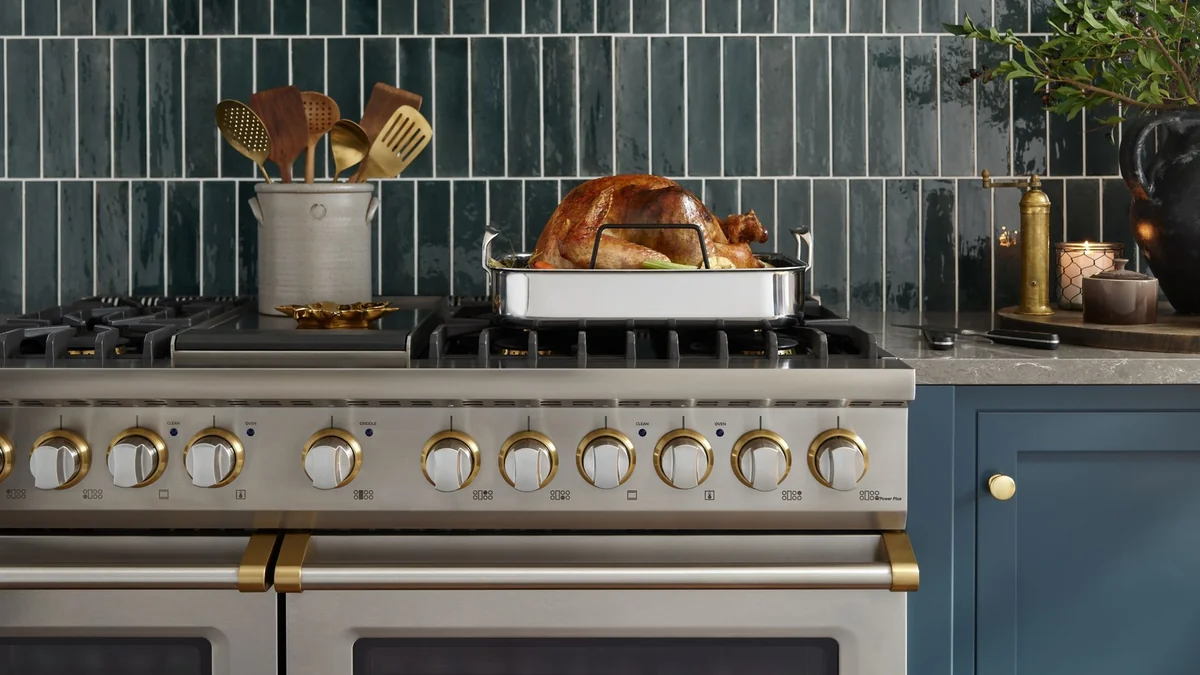
By late October, the kitchen is where everyone ends up. The oven runs most of the afternoon. Pots take over the stove. Someone always wanders in to lift a lid and ask when we are eating. Fall cooking asks more of a kitchen than a weeknight dinner does. Roasts run longer, and side dishes pile up. Fall cooking ideas bring apples and squash back into rotation with slow-cooked meals.
The hard part is keeping it all moving. A pie needs the oven while the potatoes need the stove. The turkey has to rest somewhere warm. Steady heat and enough oven space help keep the meal on time. A clear workflow matters too. The best fall dinner party ideas are easier to pull off when the kitchen can handle the crowd.
How Viking brought professional-style cooking home
Viking says it introduced the first commercial-style range designed for home use in 1987. The goal was to bring the control of a commercial kitchen into a home. Viking sized the range for the way families cook. That launch set the direction for the broader kitchen line it sells today.
Viking opened its first manufacturing plant in Greenwood, Mississippi. It was the hometown of founder Fred Carl Jr., who wanted a range with real cooking power in his own kitchen. Viking’s current story still points to American craftsmanship and those Mississippi roots. We treat its wider quality claims as brand positioning and check each model on its own merits. The 1987 launch helped define professional-style cooking at home.
Viking’s current range story centers on the build, with heavy-gauge stainless steel and solid metal knobs. Eligible models add burners made for high heat and a slow, steady simmer. Viking calls the range the center of the kitchen, where meals and traditions come together. For a fall table, that fits. The range is where most of the work happens.
Viking sits in the luxury kitchen appliances category, and the prices reflect that. For cooking, the parts that matter are control and capacity, which is what the rest of this story is about.
Why the range comes first
When several dishes have to land at once, the range shapes how the meal comes together. Fast heat and enough oven space matter more with a crowd than on a Tuesday. Steady timing matters too. The range carries most of that work.
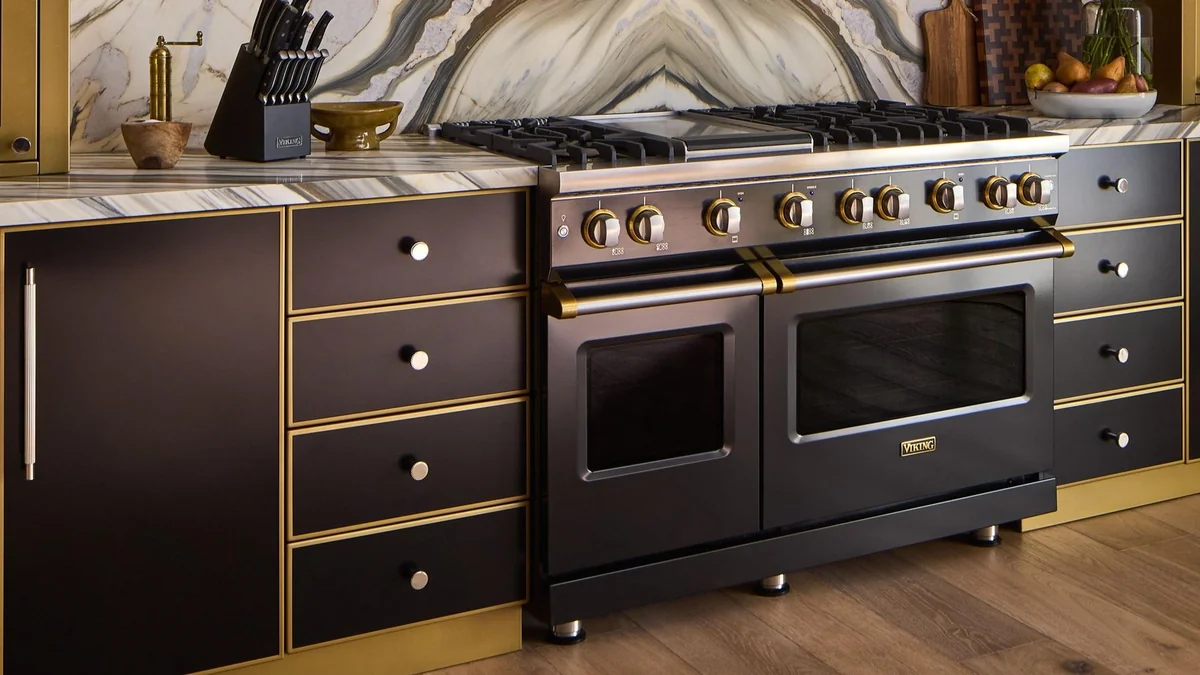
A big fall meal is a timing puzzle. You might sear meat while a sauce stays at a low simmer. Vegetables can roast in the oven at the same time. A Viking range is built for that mix. The cooking line runs from gas to induction, so you can pick the fuel you cook best on. It also comes in many finishes and colors. A Viking gas range gives you an open flame. Many cooks prefer that direct feedback. Induction heats quickly and has a smooth surface that is easy to wipe down.
Heat control and timing for a full table
High, responsive heat handles the loud jobs: searing, boiling a big pot for pasta, getting a pan ripping hot. The quieter skill is low heat. Viking’s 5 Series ranges include a VariSimmer setting that holds a gentle, even flame under a delicate sauce or a pot of soup while the rest of the meal finishes. Keeping a sauce steady for an hour without scorching is harder than it sounds, and it is exactly what a gathering asks for.
Oven space when several dishes compete
The oven is often the bottleneck. A turkey and a tray of squash need room. A pie may have to wait. Full-extension racks can bring heavy cookware farther out of the oven. Some current 5 Series wall ovens use convection and full-extension racks, but exact features vary by model. Ask how much you cook at once. Then choose an oven that can handle your busiest meal.
Build the workflow beyond the range
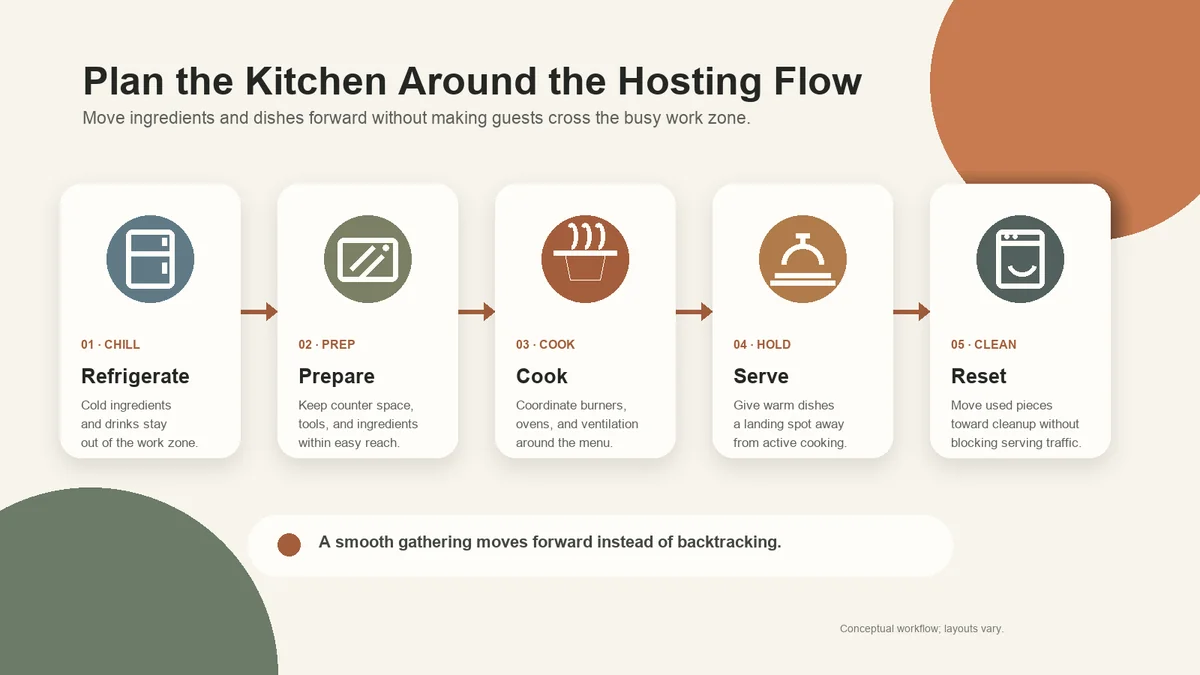
The range does the cooking, but a gathering needs more than one appliance. Viking groups its kitchen appliances around five jobs: cook, chill, vent, clean, plus outdoor grilling. These are professional-style appliances for the home. Set them in clear work zones, and you can cook for a crowd without tripping over yourself.
By the end of the 1990s, Viking had grown beyond that first range. Its line included cooking and ventilation, then refrigeration and cleanup. Think of it like a small restaurant line. Put cold storage on one side and prep space in the middle. Keep the range and oven in the hot zone, with cleanup near the sink. Each Viking category has a job in that flow.
If the weather holds, some of the cooking can move outside. Viking’s outdoor line includes grills and side burners, plus undercounter refrigeration. Its outdoor warming drawer can hold finished dishes until service. This setup adds cooking space and keeps drinks cold without sending the cook back indoors.
Prep and refrigeration before guests arrive
Most of hosting happens before anyone rings the bell. You shop ahead, make sauces, and stage trays. Viking’s refrigeration includes built-in and integrated units, plus freestanding and undercounter models. The line also has wine storage. That gives you room for ingredients and drinks, plus make-ahead dishes. Plan the menu around the fridge and oven space you have. It is one of the simplest ways to make cooking for a crowd easier.
Ventilation and cleanup during service
Four burners and a hot oven can heat a room fast. Cooking odors build up too. Viking says its hoods are designed to capture smoke and steam along with odors. Size the hood and blower from the installation documents for the exact appliances. A warming drawer can hold a finished dish while the last one cooks, but check the food temperature. Keep hot dishes at 140°F or warmer and cold dishes at 40°F or colder. Put leftovers in the fridge within two hours. If food sits outside above 90°F, refrigerate it within one hour. When the meal ends, a dishwasher takes on the pots and place settings.
Plan the kitchen before choosing appliances
Professional-style appliances need careful planning. Hookups and ventilation vary by model, as do the required clearances, so the room has to be designed around the appliance you choose. Before you pick a professional-style range, plan for:
- Choose gas or induction and confirm the hookups the appliance needs.
- Size the ventilation for the range and the room.
- Check the dimensions, including room for doors and drawers to open.
- Confirm clearances to nearby cabinets and walls.
- Plan the flooring and installation, including any power or gas work.
- Budget for the whole setup, not the range alone.
One more honest note. Features change from one series to the next. VariSimmer belongs to certain lines. So does convection. Check the exact model before you count on a feature. We can help match the appliance to how your household cooks instead of choosing from a spec sheet alone.
This is where an in-person plan helps. We can match a Viking kitchen to real cooking habits, the usual guest count, and the oven space a holiday meal needs. Professional kitchen appliances are a long-term choice, and it is worth getting the fit right the first time.
Make room for the meals ahead
The kitchen sits at the center of fall gatherings, and the range sits at the center of the kitchen. Each appliance around it has a job. Cold storage holds the food before cooking. Ventilation and cleanup support the meal as it moves along. A good layout keeps prep and cooking from competing with cleanup for the same space.
The Viking appliances collection is a practical starting point for planning. Think about how you like to host before choosing the room’s layout. Bring the room dimensions and your usual guest count to Masters, and we can help match the cooking setup to the way you gather.