

Bosch Refrigerators Compared
Short answer: the Bosch 800 Series B36CT80SNS is the best all-around Bosch refrigerator we carry. It is a counter-depth french-door model with Bosch’s strongest freshness system and a clean, flush front. If you want more room for groceries, step up in size with the 500 Series B36FD52SNS at 26 cubic feet. If price leads, the 100 Series B36CD10ENS and 100 Series B36FD10ENS cover counter-depth and full-size at the lowest prices in the lineup.
Bosch sorts its fridges into three series, and that is the fastest way to shop them. The 100 Series covers the basics at the lowest prices. The 500 Series adds more storage and faster ice. The 800 Series sits on top, with dual compressors and humidity-controlled drawers that hold produce longer.
Most Bosch refrigerators at this size are 36 inches wide with a french-door layout, two doors on top and a freezer drawer on the bottom. The big split is counter-depth versus standard depth. Counter-depth models sit nearly flush with your cabinets for a built-in look, but they hold a little less inside. Standard-depth models stick out past the counter and give you more cubic feet.
We stock seven Bosch refrigerators right now. Below we line them up in a quick table, then sort them by who each one suits.
Quick Comparison
| Pick | Model | Series | Capacity | Depth | Water dispenser | Masters price |
|---|---|---|---|---|---|---|
| Best overall | B36CT80SNS | 800 | 20.8 cu ft | Counter-depth | Internal | $3,899 |
| Best premium deal | B36CL81ENG | 800 | 20.5 cu ft | Counter-depth | Internal | $2,997 (5 to 6 day order) |
| Best four-door alternative | B36CL80ENS | 800 | 20.5 cu ft | Counter-depth | Internal | $3,999 |
| Best capacity | B36FD52SNS | 500 | 26 cu ft | Standard | External | $3,199 |
| Best value | B36FD10ENS | 100 | 26 cu ft | Standard | External | $2,449 |
| Best budget counter-depth | B36CD10ENS | 100 | 21.6 cu ft | Counter-depth | External | $1,597 |
| Integrated-handle 800 | B36CT81ENS | 800 | 20.8 cu ft | Counter-depth | Internal | $3,899 |
How We Tested & Evaluated Bosch Refrigerators
Our Approach
We spent time with several Bosch refrigerators in our warehouse. We wanted to see how each model handles busy households, so we stocked them with fresh produce, leftovers, and frozen goods. We also tracked how they performed on normal day-to-day tasks, opening and closing doors, refilling water, and grabbing ice.
We looked for real-world behavior, not just lab conditions. That meant watching how long leafy greens stayed crisp or how quickly ice makers refilled. We checked if any strange noises popped up when the fridge kicked into a cooling cycle. We also noted the overall build and feel, did shelves feel sturdy, or did drawers stick when pulled?
Criteria & Metrics
We focused on the following points:
- Temperature Stability
Each fridge was set to its default refrigerator and freezer temps. We then measured how closely it held those settings. We noted if anything froze in the crisper or if the freezer ever crept above zero.
- Humidity & Food Freshness
Some Bosch models feature drawers with adjustable humidity. We placed fruits and vegetables inside to see how well they stayed fresh. We also stored meats to gauge any odor transfer.
- Noise Levels
We listened in homes with open-floor plans, where a loud compressor can bother people in nearby rooms. If a fridge was nearly silent, we marked that as a plus.
- Ice & Water Systems
We measured how many pounds of ice each model produced in 24 hours. We also looked at the ease of using the dispenser, was the opening tall enough for a pitcher? Did the dispenser drip after we removed a glass?
- Smart Features & App Connectivity
Some Bosch models have Wi-Fi controls. We tested if the companion app worked reliably. We tracked any alerts it gave, like open-door notifications or temperature changes.
- Reliability & Maintenance
We tracked any problems during our trial, such as slow ice production or faulty sensors. We also gathered feedback from owners who have had these fridges for a year or more. That helped us see any recurring issues.
Customer Input & Comparisons
We read reviews from people who bought these fridges to confirm our own impressions. Many praised the quiet operation and good produce life. Some noted ice maker glitches or doors that need a firm push. Those real-life stories let us see if our experiences matched theirs.
We also compared Bosch refrigerators to similar models from LG, Samsung, KitchenAid, and GE Café. This gave us a sense of how Bosch stands out in cooling performance and build quality. We looked at features like door-in-door options or fancy touchscreens on other brands, then weighed them against Bosch’s focus on food preservation.
Our goal was to combine hands-on trial, shared stories from owners, and specs from respected sources. This balance helped us see which Bosch fridge might fit different needs best, whether it’s extra capacity, quieter operation, or specialized freshness features.
Bosch Brand Overview: What Sets Them Apart
Bosch is known for well-engineered appliances. They focus on dependable cooling over flashy extras. We see them mentioned alongside KitchenAid, GE Café, LG, and Samsung. While those brands often spotlight features like door-in-door storage or big touchscreens, Bosch leans into design and food preservation. Many of their fridges include humidity controls, dual compressors on select models, and sleek finishes.
A Focus on Freshness
Bosch highlights their FarmFresh System on 800 Series models. This combines several features:
- VitaFreshPro drawers that let people pick ideal humidity and temperature settings.
- Dual Compressors and Dual Evaporators in some models to keep fridge and freezer air separate.
- MultiAirFlow vents for even temperatures throughout.
These steps are meant to keep fruits and veggies crisp for longer. Some say their produce stays fresh for days past the usual point. That’s a big plus for anyone who hates tossing out wilted greens.
Quiet and Refined
Bosch fridges are praised for low noise. They use inverter compressors and heavy insulation, which dampens sound. Owners who switch from noisier models often notice how little the Bosch runs. Fit and finish also stand out. Hinges are hidden, and many units include stainless interiors or trim that feels solid. There’s less emphasis on giant touchscreens or colorful panels. It’s a clean, minimalist look that aims to blend in with surrounding cabinets.
Reliability and Build Quality
Bosch launched French-door fridges in the U.S. around 2019, so long-term data is still growing. Early signs are positive. Retailers and owner surveys place Bosch high in cooling performance and mid-to-upper tier in predicted reliability. Some older Bosch products, like dishwashers, have long enjoyed a solid reputation. Their fridges seem to follow that pattern. A few people have reported ice maker glitches, but those issues aren’t as widespread as similar complaints on certain other brands.
Ideal for Those Who Value Performance
By leaning on engineering over trendy gadgets, Bosch often costs more than mainstream models from Samsung or Whirlpool. The trade-off is a fridge that aims for better food preservation, sturdier shelves, and a sleeker design. These qualities appeal to people who want a calm, organized kitchen space. Some prefer an external water dispenser and extra features. Others prefer Bosch’s simpler front design and internal dispenser options, especially on the 800 Series. Either way, the brand’s main draw is quality cooling that stays stable, quiet, and reliable.
Bosch Refrigerator Series Explained
100 Series
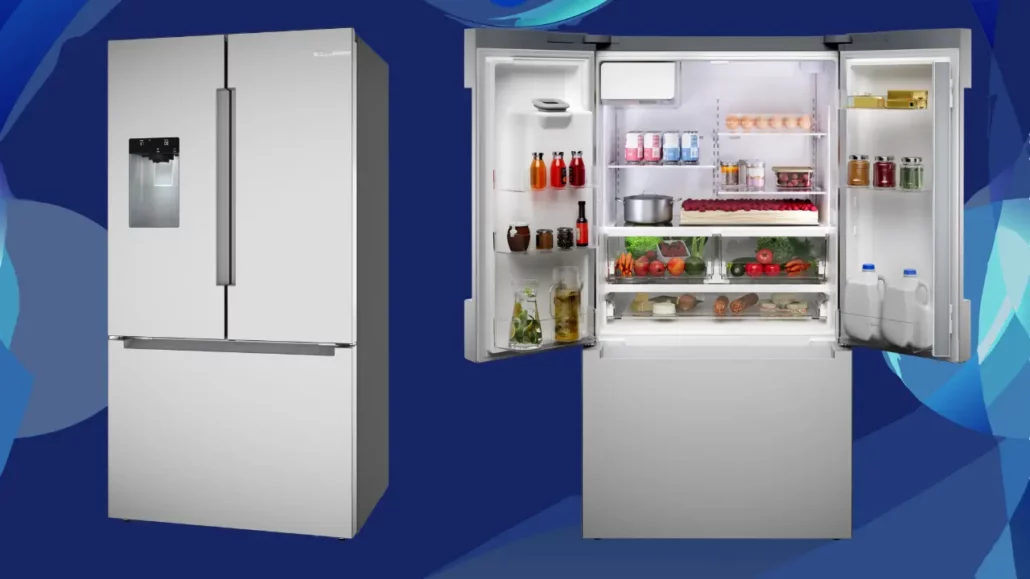
The 100 Series offers French-door refrigerators that bring Bosch’s style to a lower price. Most 100 Series models fit a 36-inch width and have a roomy interior of about 26 cubic feet. Many come with an external dispenser that provides ice and water right on the door. The 100 Series uses a single compressor, but it still manages solid cooling with what Bosch calls Total No Frost. Each model also supports Wi-Fi connectivity through the Home Connect app, which can send door-ajar alerts and let owners tweak temperatures. Even though the 100 Series is considered entry-level, it feels sturdy. It features a clean design, handles that are often recessed, and crispers that do a fair job of keeping produce in good shape. People who pick a 100 Series often cite its large capacity and its simpler price point, along with Bosch’s overall build quality.
500 Series
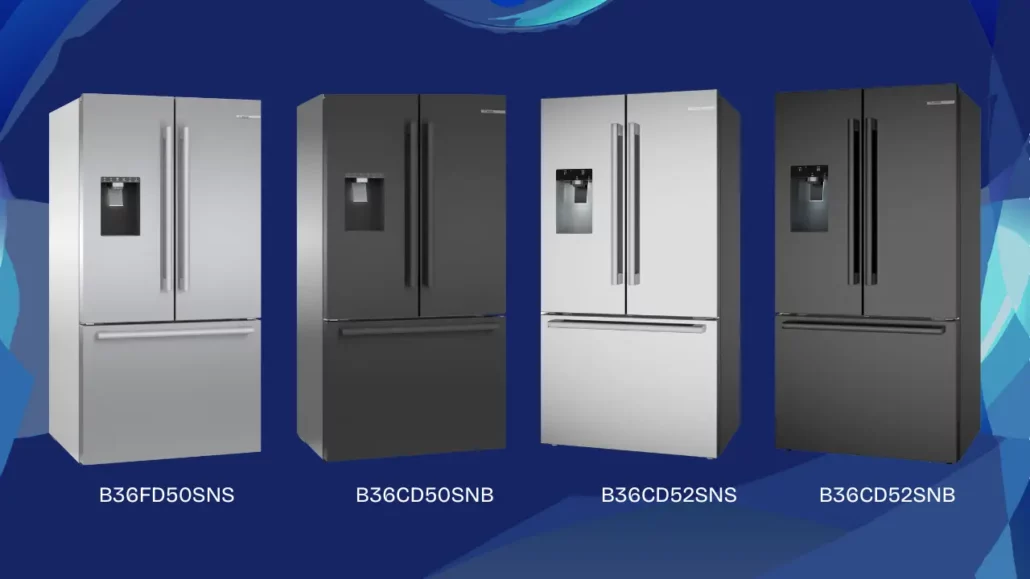
The 500 Series is a step up. These French-door models still come in 36-inch widths with standard depth, though a few variants may have a slightly different depth. Capacity is close to 26 cubic feet, so it suits those who need more storage. The 500 Series includes Bosch’s VitaFresh Plus drawers for better humidity control, along with an AirFresh filter to reduce odors. QuickIcePro is also featured, which can produce more ice per day than the 100 Series. These fridges often come with an external dispenser that has one-touch bottle fill. We have seen many reports from families who enjoy how quickly it replenishes ice. This line still relies on a single compressor, but it tends to hold temperature well because Bosch splits the evaporators for the fridge and freezer. The 500 Series is a middle ground for owners who want some of Bosch’s improved freshness features without going all the way to the 800 Series.
800 Series
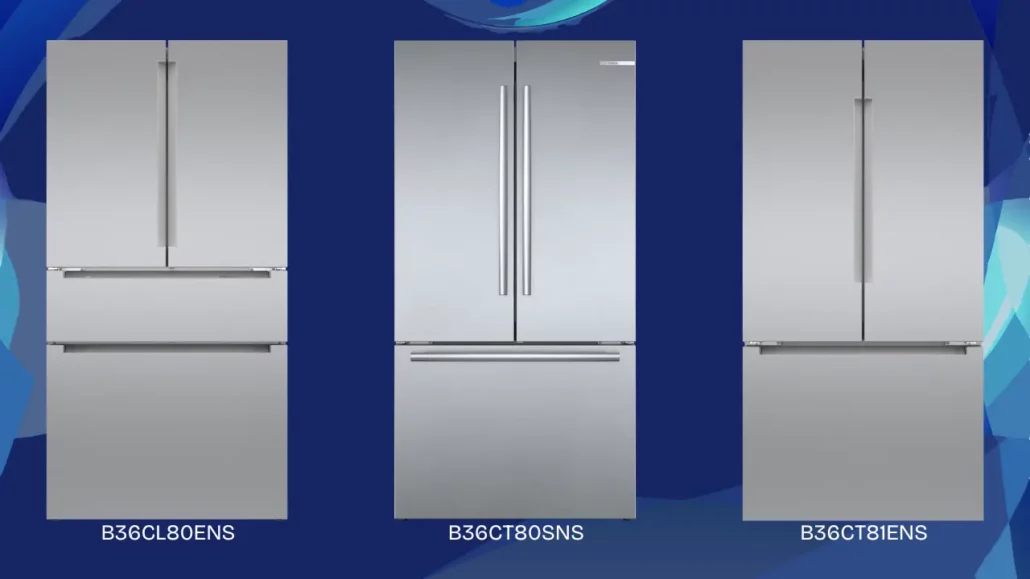
The 800 Series represents Bosch’s premium freestanding models. These are built in a counter-depth design, which makes the total capacity a bit smaller at around 20 or 21 cubic feet. The tradeoff is a sleek installation that lines up with cabinets. The 800 Series includes the full FarmFresh System. VitaFreshPro drawers allow people to select meat, fish, produce, or deli settings and set precise humidity levels. The dual compressor setup, rarely found in freestanding models from other mainstream brands, keeps the freezer and refrigerator sections fully separate. That isolation helps food stay fresher longer and prevents odors from shifting between compartments. The 800 Series also uses an internal water dispenser for a clean exterior. Some models even split the freezer into two drawers, which helps with organization. Bosch focuses on a minimalist look in these fridges. Owners praise the quiet operation, sturdy glass shelves, and easy-to-maintain stainless finishes that resist fingerprints.
Benchmark Series
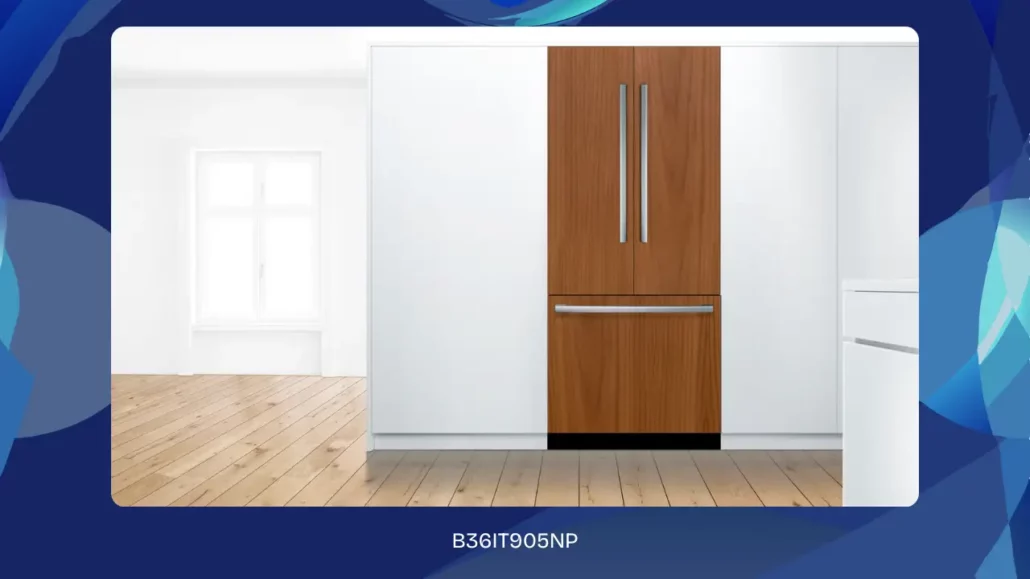
The Benchmark Series is Bosch’s high-end line for built-in kitchens. These fridges sit flush with custom panels or with a stainless option. Their capacity hovers around 19 or 20 cubic feet, which is common for a built-in. Benchmark models include dual compressors, premium lighting, and advanced climate controls. They also cost far more than standard-depth or counter-depth units from the 100, 500, or 800 Series. Benchmark fridges compete against other luxury brands such as Sub-Zero and Thermador. People who go with Bosch Benchmark often value the seamless integration and the professional look of custom cabinetry, though the price can push beyond $6,000 or $7,000. Owners who choose this line get the highest grade of Bosch craftsmanship and the option to panel the doors so the fridge disappears into the rest of the kitchen.
Bottom Freezer and Columns
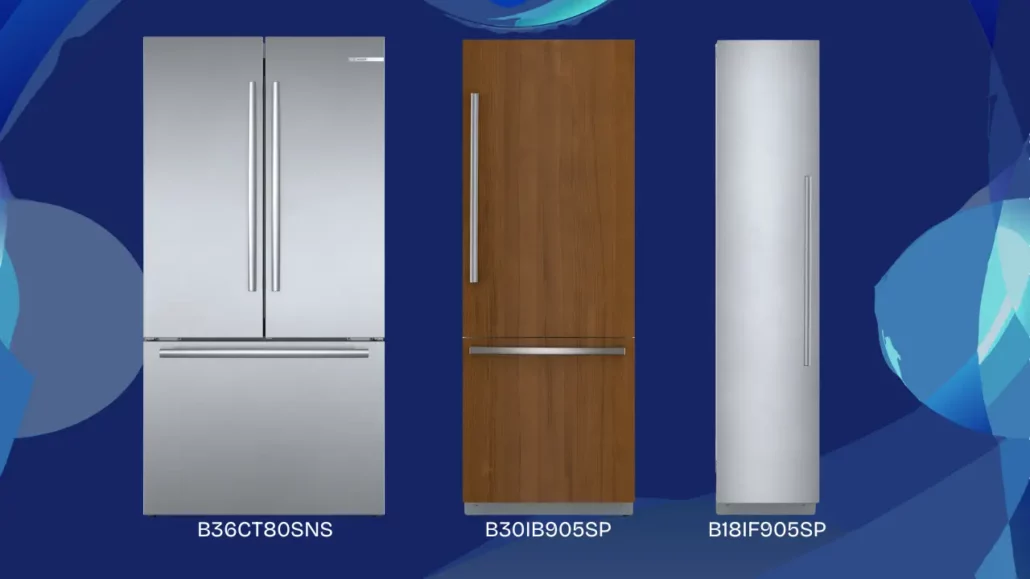
Bosch also sells bottom-freezer fridges in widths like 24 and 30 inches. These are perfect for smaller homes or secondary fridge spaces. Most come in 500 or 800 Series versions, with some having Wi-Fi and adjustable crispers. The 24-inch bottom-freezer can be installed flush for a neat appearance. Bosch includes an internal ice maker in many of these, though output might be less than a larger French-door. These smaller units still lean on Bosch’s cooling methods, often with dual evaporators or at least well-designed airflow. For a custom approach, Bosch makes columns in 24- or 30-inch widths for either all-fridge (B30IR905SP) or all-freezer use (B18IF905SP). Columns can pair side by side to create a massive storage solution. These are part of the Benchmark line and are meant for upscale kitchens that require a seamless, built-in style. Columns from Bosch give owners the chance to install them separately if there’s a need for more freezer space in another part of the home, or to match them up for a full wall of refrigeration.
Each Bosch series has a distinct level of features and price. The 100 Series focuses on value while still feeling robust. The 500 Series delivers stronger humidity control and faster ice output. The 800 Series includes the best freestanding cooling technology, with dual compressors and flexible storage layouts. Benchmark sits at the top for those who want built-in luxury or separate columns. Shoppers often pick their series based on capacity needs, dispenser preferences, and how much they value Bosch’s high-end climate controls.
Bosch 500 vs 800 Series Refrigerators
This is the most common Bosch question we hear, so here is the short version. The 800 Series is built around freshness and a flush fit. The 500 Series is built around space and ice.
The 800 Series uses two compressors and two evaporators, the FarmFresh System. One handles the fridge, the other handles the freezer. That keeps humidity right and stops freezer odors from reaching your food, and it pairs with VitaFreshPro drawers that hold a set humidity for produce. The 800 models in our lineup are all counter-depth, so they sit nearly flush with cabinets.
The 500 Series, like the B36FD52SNS, uses a single cooling system but gives you more room (26 cubic feet versus about 20.5 to 20.8 in the 800 counter-depth models) and QuickIce Pro for faster ice. It is standard depth, so it holds more but stands out past your counters. Pick the 800 Series for food preservation and a built-in look. Pick the 500 Series for storage and quicker ice.
Bosch 100 vs 500 vs 800 Series
A quick way to choose by series:
- The 100 Series has the lowest prices. You get solid french-door fridges with external water and QuickIce Pro on counter-depth models, but no humidity drawers or dual compressors. Best when price leads, like the B36CD10ENS and B36FD10ENS.
- The 500 Series is the storage pick. Full 26 cubic feet, QuickIce Pro, and VitaFreshPlus produce drawers, in a standard-depth body. Best for busy families, like the B36FD52SNS.
- The 800 Series is the top tier. Dual compressors, VitaFreshPro drawers, a counter-depth fit, and quieter running, at higher prices and with less raw space. Best for a premium kitchen, like the B36CT80SNS and four-door B36CL80ENS.
Best Bosch Refrigerators by Use Case
Best Overall: Bosch 800 Series B36CT80SNS
Our top pick across the lineup is the Bosch 800 Series B36CT80SNS, a 36-inch counter-depth french-door fridge at $3,899. It runs what Bosch calls its FarmFresh System, which pairs two compressors with VitaFreshPro humidity drawers. Two compressors mean the fridge and freezer cool on their own, so freezer smells stay out of your produce and the humidity holds steady. In plain terms, fruit and greens last longer.
At 20.8 cubic feet it is not the roomiest box here, and the water dispenser sits inside, not on the door. You also get one internal ice maker, not a high-output dispenser. For a quiet fridge that fits flush and protects food well, those are easy tradeoffs. Skip it if you fill a fridge to the brim every week or want door-mounted water and ice.
Best Premium Deal: Bosch 800 Series B36CL81ENG
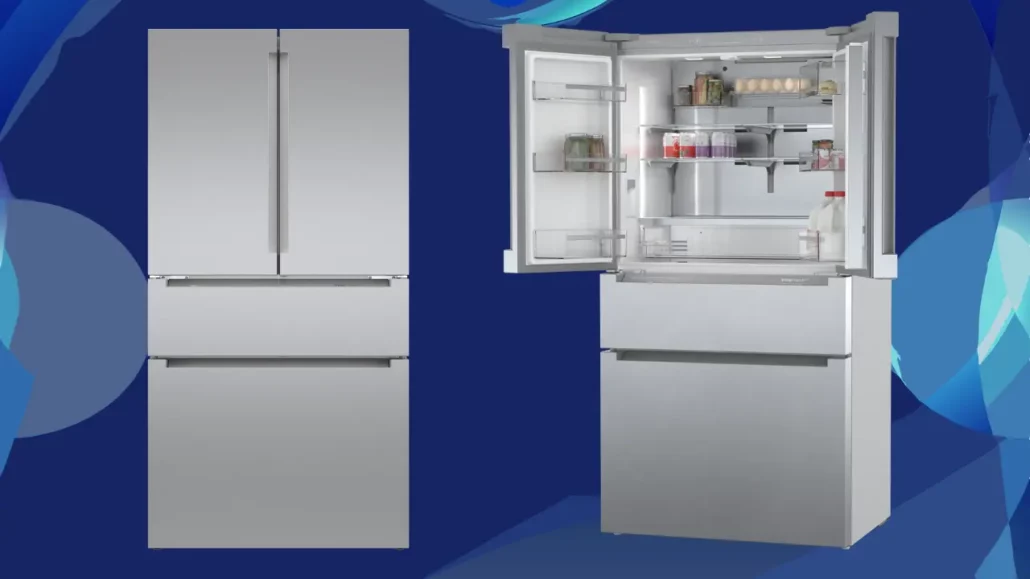
The deepest discount in our Bosch lineup is the 800 Series B36CL81ENG, down to $2,997 from a $5,199 list price, a saving of $2,202 (about 42 percent off). It is a four-door counter-depth model with a middle drawer you can set for drinks, deli items, or party trays. You get 800 Series build and layout for less than the standard four-door price.
One catch: it is a special order that ships in about 5 to 6 days, not an in-stock pickup. If that timing works, it is the strongest value in this guide.
Best Four-Door Alternative: Bosch 800 Series B36CL80ENS
If the B36CL81ENG deal sells out or the wait does not suit you, the in-stock 800 Series B36CL80ENS covers the same four-door layout at $3,999. It has dual compressors and the middle-drawer setup, so the everyday experience matches the deal model. You pay full price, but you can have it now.
Best Capacity: Bosch 500 Series B36FD52SNS
Families who go through a lot of groceries should look at the 500 Series B36FD52SNS. At 26 cubic feet it holds far more than the counter-depth 800 models, and at $3,199 it costs less than our top pick. Because it is standard depth, it sticks out past your cabinets a bit. The payoff is space, plus QuickIce Pro for faster ice and an external water dispenser with a tall Bottle Fill spout. You give up the 800 Series dual-compressor system, though the 500 Series still has VitaFreshPlus drawers to keep produce going.
Best Value: Bosch 100 Series B36FD10ENS
The 100 Series B36FD10ENS keeps the big 26 cubic foot box and drops the price to $2,449. It is standard depth with an external water dispenser and Bottle Fill, so day to day it works much like the 500 Series. You lose the premium freshness features here: no VitaFreshPro, no dual compressors. For a roomy Bosch fridge at a lower price, that is a fair deal, and it is our pick when capacity matters more than the latest cooling tech.
Best Budget Counter-Depth: Bosch 100 Series B36CD10ENS
At $1,597, the 100 Series B36CD10ENS is the lowest-priced Bosch fridge we stock. It gives you the flush counter-depth look and Bosch basics in a 21.6 cubic foot french-door body, with QuickIce Pro and an external water dispenser. The 100 Series skips the humidity-controlled VitaFresh drawers and the dual-compressor cooling, so produce will not keep as long as it does in the 800 models. For the built-in look without spending past $3,000, it is the easy choice.
Best Integrated-Handle 800 Series: Bosch B36CT81ENS
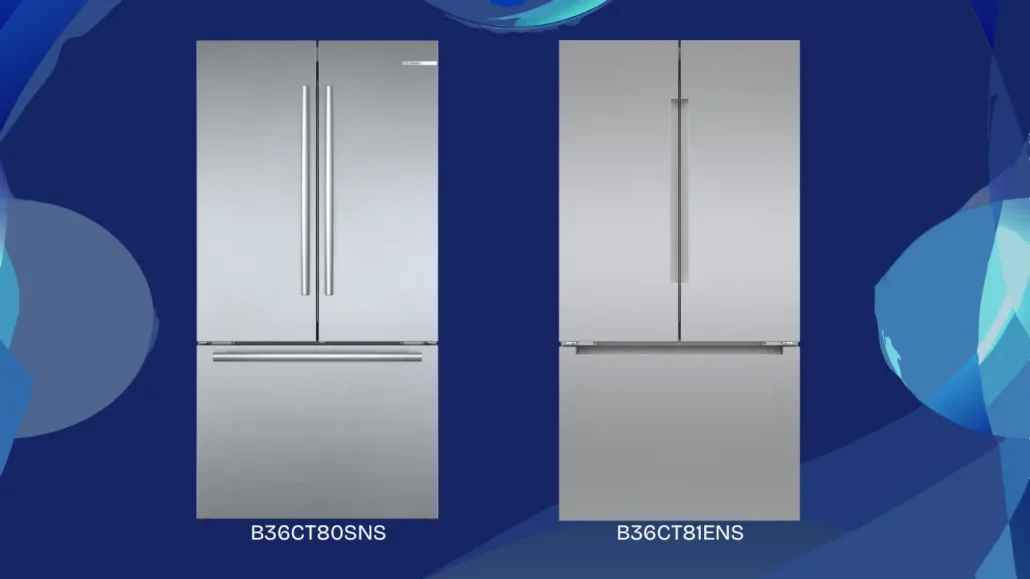
Bosch sells the same 800 Series cooling story in a handle-free cabinet, the B36CT81ENS at $3,899. It matches the B36CT80SNS on size (20.8 cubic feet) and counter-depth fit, with VitaFresh drawers and a FlexBar shelf for tall or odd-shaped items. The difference is the front: a flat, integrated look instead of bar handles. Choose it for the cleaner styling, or the B36CT80SNS if you prefer traditional handles.
Product Photos from Our Review
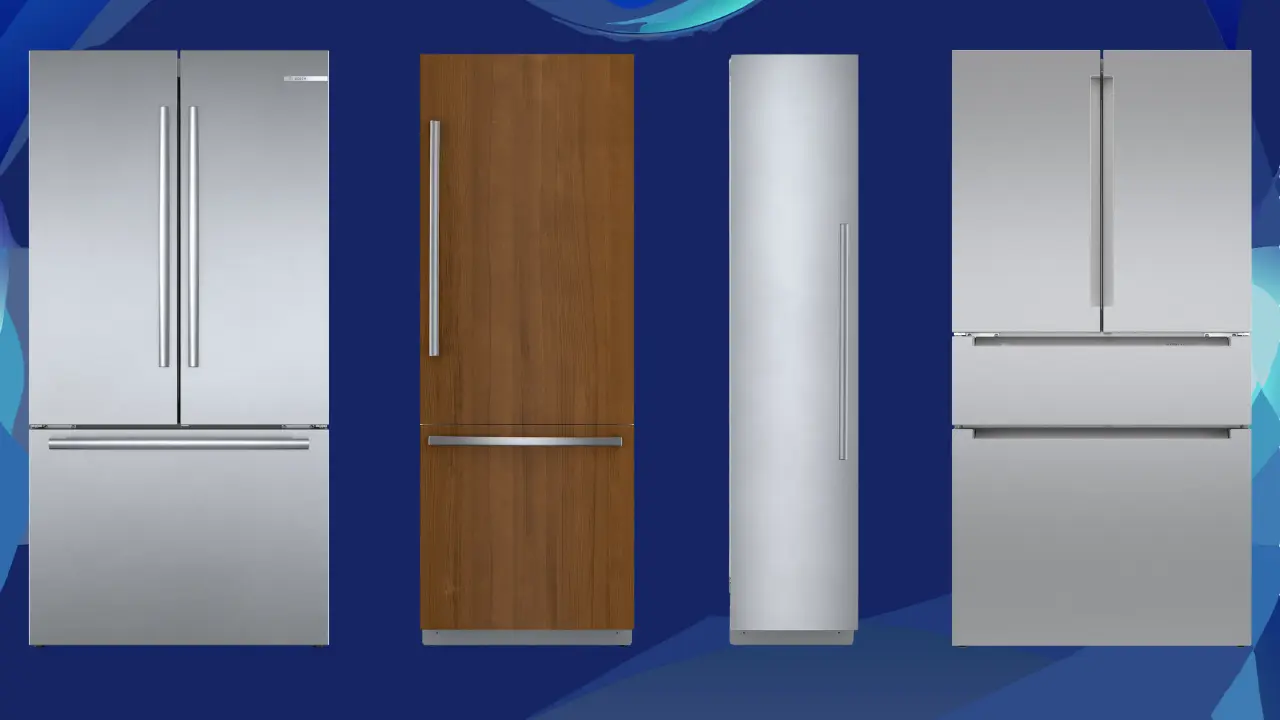
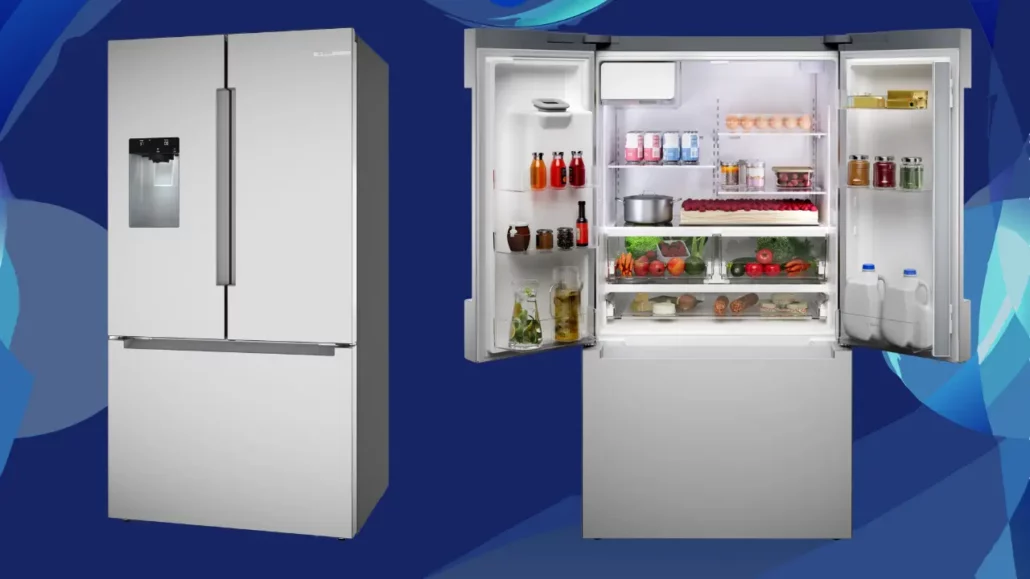
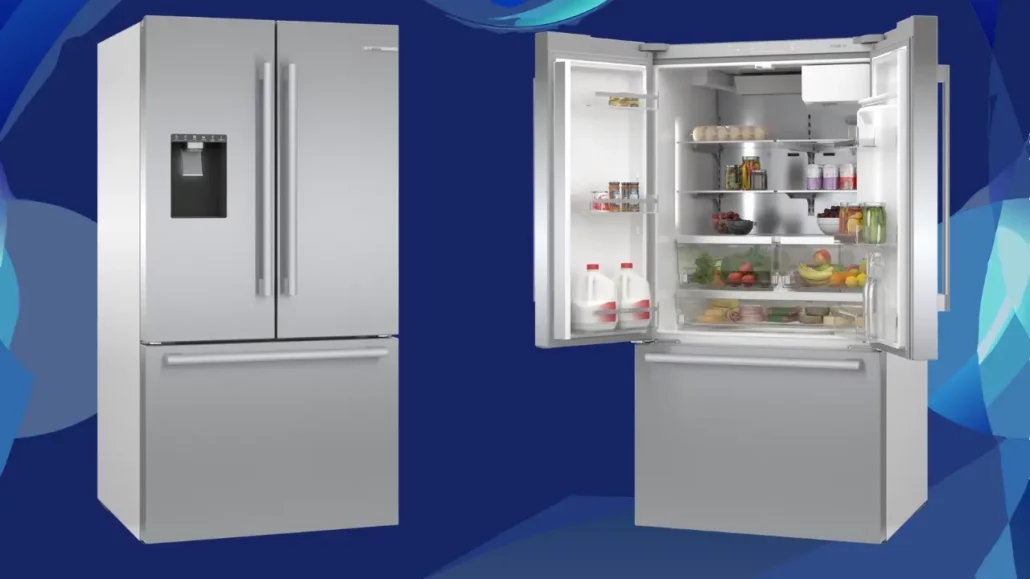
We kept the original product photography in this update because it still helps readers see the Bosch layouts, finishes, and door styles side by side. Some older image captions reference prior model numbers; use the current pick notes above for today’s exact Masters inventory and pricing.
Key Features & Performance Factors
| Feature | 100 Series | 500 Series | 800 Series | Benchmark |
|---|---|---|---|---|
| FarmFresh System | Not included | Not included, though has VitaFresh Plus drawers | Yes, includes VitaFreshPro, Dual Compressors, AirFresh Filter | Yes, with built-in/column variants for premium cooling |
| VitaFreshPro Drawers | No | VitaFresh Plus (adjustable humidity) | Yes, with more precise settings | Yes, similar climate controls in built-in designs |
| Dual Compressors | No (single compressor only) | No (single compressor, dual evaporators) | Yes, keeps fridge/freezer air separate | Yes, also found in columns and built-in units |
| QuickIcePro | Not typically included | Yes, faster ice output | Yes, but with internal ice storage | Yes, though exact output depends on built-in model |
| External Dispenser | Yes on most French-door models | Yes on most French-door models | Typically internal dispenser only | Internal or panel-ready options only |
| FlexBar | No | Not usually included | Yes, in select 800 Series models | May vary by built-in column configuration |
| Three-Tier Freezer | No | Usually a single or dual basket setup | Yes, in select French-door variants for better organization | Column/built-in freezers use their own layout |
| UltraClarityPro Filter | Yes, in water-dispensing models | Yes, in water-dispensing models | Yes, included with all water-dispensing 800 units | Yes, standard in built-in options if water-dispensing |
| Wi-Fi (Home Connect) | Yes (varies by model) | Yes (varies by model) | Yes, standard on most 800 Series | Yes, standard on Benchmark |
| Counter-Depth Style | No (standard-depth) | Mostly standard-depth, some exceptions | Yes, all 800 Series freestanding models are counter-depth | Yes, fully built-in or panel-ready |
Feature availability by Bosch refrigerator series, from 100 to Benchmark.
**
Dual Compressors vs. Single Compressor
Bosch sets itself apart by offering dual compressors in the 800 Series and Benchmark lines. One compressor cools the refrigerator section, and another cools the freezer. This helps the fridge maintain higher humidity for produce while the freezer stays drier to prevent frosting. It also means odors from seafood or strong cheeses are less likely to drift into your ice. Owners of dual-compressor Bosch models report that produce often stays crisp longer. A few also say these models run with almost no hum since each compressor cycles at lower speeds.
Bosch Fridge Dual Compressors
The single-compressor options found in the 100 and 500 Series still provide decent temperature control. They rely on smart airflow designs and dual evaporators (or at least effective venting) to keep cold air moving as needed. The food stays fresh for a reasonable stretch. People typically pick single-compressor units when they want to spend less or need a roomier model with an external dispenser.
FarmFresh System and VitaFresh Drawers
On the 800 Series, Bosch includes a FarmFresh System, which centers on VitaFreshPro drawers. Each drawer has a selector that lets you pick settings for produce, meats, or deli items. Turning the dial or tapping the touch controls adjusts humidity levels and sometimes temperature for that drawer. Bosch claims these climate tweaks can keep produce fresh up to three times longer. We haven’t measured exact timeframes in a lab, but we have seen strawberries that stayed plump and lettuce leaves that didn’t wilt for many days.
FarmFresh Overview
The 500 Series includes VitaFresh Plus. This also allows for humidity choices, though it’s not as extensive as the “Pro” version. The 100 Series gets simpler crisper drawers with standard humidity sliders. Owners who store lots of delicate greens or pricey cuts of meat often gravitate to the 800 Series since it offers the strongest specialized cooling for each zone.
MultiAirFlow and AirFresh Filters
Every Bosch refrigerator includes some level of MultiAirFlow, which pushes cool air around the fridge interior. We’ve placed temperature sensors in the main cavity and found that warm spots rarely appear, even if the fridge is packed with leftovers. The AirFresh carbon filter appears in the 500 Series and higher, though certain 100 Series variants may offer a similar deodorizing filter. These features cut down on odors from onions or spicy foods. They also stop lingering smells from seeping into milk or eggs.
Ice Makers and Water Dispensers
Bosch’s QuickIcePro system delivers faster ice production in the 500 and 800 lines. Bosch says it can generate up to 12 pounds of ice per day in some models, which beats many other fridges that only handle six to eight pounds. Owners love how quickly ice bins refill. We’ve found that large families appreciate this, especially if they host gatherings.
QuickIcePro Overview
Dispenser style differs by series. The 100 and 500 Series often include an external dispenser that offers water and ice on the door. The 800 Series usually goes for an internal dispenser to preserve a clean exterior. That design also keeps the fridge door less cluttered and may reduce the chance of leaks or dripping.
Some owners miss having crushed ice on demand, so it comes down to personal preference. The internal dispenser does free up room on the door for taller bins.
FlexBar Flexible Storage
Some 800 Series Bosch models include a FlexBar that stretches across part of the interior wall. We’ve used it to hold items like eggs, condiment bottles, or small yogurt cups. It frees up shelf space by making use of a spot that might otherwise stay empty. People who like to keep their fridge neat enjoy how it keeps shorter items from rolling around. The bar itself can often be repositioned or removed if you need the extra vertical space instead.
FlexBar Overview
We’ve found that storing smaller jars on the FlexBar cleared room for larger containers below. This feature shows Bosch’s design goal of maximizing the usable interior. Instead of leaving a wasted gap under the top shelf, they turned it into a mini shelf of its own. It might not be a must-have for everyone, but owners who like to arrange their fridge down to the last inch may find it handy. If you prefer to cluster bottles and eggs on a normal shelf, you can remove the bar entirely. We see this sort of flexible approach as another piece of Bosch’s emphasis on everyday practicality.
True Counter Depth for a Built-In Look
Many 800 Series Bosch models are what some call true counter-depth. The fridge body lines up closely with standard kitchen cabinets, so it appears almost built-in. The doors and hinges don’t add as much bulk in front as other counter-depth brands often do. One owner said, “Ours sits flush with our cabinets so well that people think it’s a built-in.”
This design choice appeals to those who value a streamlined kitchen. We’ve placed an 800 Series fridge in a standard 24-inch cabinet depth space and noticed that it extends only a little, keeping the profile neat. Owners who want a sleek finish without going for a full built-in or custom panels often pick these 800 Series models. The look stays minimalist, and the overall shape feels more polished when compared to many standard-depth refrigerators.
Wi-Fi and App Integration
Most new Bosch fridges feature Home Connect, which links to a smartphone app. You can monitor temperatures, switch to a “SuperCool” or “SuperFreeze” mode, and get door-ajar alerts if someone leaves the fridge open. This app tends to work smoothly once it’s set up, though a few people have mentioned minor hiccups while pairing older Android phones. Bosch sometimes updates the app, so minor issues often get resolved.
Bosch Home Connect
We’ve seen real benefits for people who like remote monitoring. If you’re away on vacation, you can confirm that everything is still cooling properly. It’s not a flashy touchscreen on the door, but it’s practical in day-to-day use.
Noise and Build Quality
Many Bosch owners say their fridge runs quieter than models they replaced. The combination of inverter compressors, thick insulation, and good door seals keeps noise levels low. This is especially welcome in homes where the kitchen connects to living rooms.
The fit and finish also stand out. Fridges in the 800 Series or Benchmark line may include metal trim on shelves, hidden hinges, and anti-fingerprint stainless that resists smudges. Even the 100 Series, despite its lower price, often feels more solid than similarly priced fridges from other brands. A few people have complained about doors requiring a firm push, but in most cases, the build quality draws positive reactions.
Three-Tiered Freezer for Organized Storage
Certain 800 Series Bosch refrigerators feature a bottom freezer with three layers of storage. The top shelf often holds an ice bin that makes pyramid-shaped cubes. A second shelf or basket sits beneath it for items like frozen pizzas or produce bags. The final, deeper basket rests at the bottom for bulky items such as large cuts of meat. This layered approach helps keep everything visible and prevents smaller things from getting buried. It also keeps the ice in a separate spot, which makes it easy to fill a glass without shuffling through other frozen foods.
Three-Tiered Freezer
We’ve placed frozen leftovers on the middle tier and ice cream in the lower bin, then kept ice at the very top. This setup let us access each item with minimal digging. The pyramidal ice cubes fit well into cups and look a bit more upscale than standard crescent shapes. Owners often mention how this three-tier freezer keeps them more organized compared to a single deep drawer. If you like everything in its place, the layered system delivers a tidy solution.
UltraClarityPro® Water Filter
All Bosch models with a water dispenser include the UltraClarityPro® filter, which is designed to remove over 99.9% of sediments from tap water. People who switch from older fridges often notice an improvement in water taste and clarity. Bosch uses a simple twist-in mechanism to replace this filter, which takes only a minute.
UltraClarityPro Water Filter Overview
The six-month replacement cycle (or about every 700–1,000 gallons) helps maintain fresh-tasting water and keeps ice cubes free of odors or debris. Some owners say their water tastes better than store-bought bottled options, while others note fewer mineral deposits on dishes they rinse.
Customer Reviews & Real-World Feedback
People who own Bosch refrigerators often share detailed stories online. Many talk about how quiet these fridges are, along with the improved shelf life for produce and meats. It’s common to see star ratings around 4.4 to 4.6 out of 5 on major retail sites. One reviewer posted, “My Bosch is dead silent and has kept vegetables fresh much longer than any others.” That line appears often, with others calling out how produce stays crisp for days longer than expected.
A large number of owners also love the sleek design. The counter-depth 800 Series fridges earn praise for looking almost built-in, thanks to hidden hinges and flush doors. People say it feels upscale compared to similarly priced competitors. One person wrote, “It’s a true counter-depth and so flush against my cabinets, plus the stainless hides fingerprints.”
Positive remarks about the ice maker appear most for the 500 Series and 100 Series, where Bosch places the QuickIcePro system. Families who need a steady supply of ice claim they rarely run low, with one reviewer noting, “We had a big birthday party and never ran out of ice, even on a hot summer day.” Some do mention the dispenser dripping a bit after use, although that’s a minor gripe for many owners.
While there’s a lot of praise, not everything is perfect. A common complaint involves the French doors. Several people say they have to push the right door firmly, or it may stay ajar. One reviewer wrote, “The right door doesn’t close easily… I get 10-15 warnings a week that it’s still open.” This is less of an issue if you build the habit of giving the door a solid push. Another frustration centers on occasional delays with customer service when repairs are needed. One person claimed, “The wait is weeks long,” which caused them trouble when a part had to be ordered.
Ice maker concerns do pop up. A handful of owners report slow ice production or a glitch that required a service call. That happens less frequently than with some other brands, based on broader discussions, but it’s still worth noting. A few people also mention that the internal ice bin in 800 Series models can be too small if they want to fill big coolers. They either rely on bagged ice for parties or switch to a 500 Series model that creates more pounds of ice per day.
Despite these hiccups, the general tone is positive. Bosch fridges get compliments for consistent cooling and how stable the temperature stays, even during door openings. People who store plenty of produce say they see real differences with the VitaFresh drawers, particularly if they own the 800 Series. Comments about “perfect lettuce for over a week” and “carrots staying crunchy” appear often. The quiet operation also ranks high on the list of likes. Some mention moving from a louder brand and being shocked by how they barely hear the Bosch fridge at all.
One more pattern that stands out is that owners with large households often pick the 500 Series for its mix of faster ice output and bigger capacity. Smaller families who care more about fresh produce and a refined look lean toward the 800 Series. Budget shoppers who still want a Bosch find themselves pleased with the 100 Series, though they sometimes wish it had more of the advanced humidity settings. Overall, these reviews tell us that Bosch delivers on solid cooling, minimal noise, and decent ice supply. The main issues revolve around door closure quirks or waiting on parts if repairs are needed. Nonetheless, the satisfaction level remains high, and many say they would choose Bosch again.
Pros & Cons Summary
Pros
- Long-Lasting Freshness
Bosch fridges often keep produce crisp longer. Dual-compressor models in the 800 Series excel at holding humidity in the fridge while maintaining a dry freezer. People who buy many fruits and vegetables see real benefits.
- Quiet Operation
Many find these refrigerators run at a low hum. The compressors and insulation reduce noise, which makes these a good match for open living spaces.
- Solid Build & Materials
Shelves feel sturdy, and the stainless steel often resists smudges. Door hinges are hidden on most units, giving a neat, premium look. Even the 100 Series tends to feel more robust than other brands in its price range.
- Flexible Storage
Models in the 800 Series include adjustable shelves, a FlexBar in some variants, and spacious door bins. The 100 and 500 Series also come with generous interiors, especially the standard-depth versions.
- Strong Ice Output
The 500 Series stands out for quick daily ice production. Owners report fewer shortages during parties or large family meals. The external dispenser models also help if people want easy access.
Cons
- Higher Prices
Bosch often costs more than major competitors. Some look to Samsung or LG for a lower price with similar capacity. Bosch’s focus on engineering drives up the cost.
- Door Closure Quirks
Multiple owners mention the French doors need a firm push to fully seal. The fridge sounds an alarm if left open, which some find annoying when it happens repeatedly.
- Occasional Ice Maker Glitches
A small percentage of people have reported malfunctions or slow ice output. Some had to schedule a repair visit that took extra time.
- Limited Dispenser Choices in Higher Series
The 800 Series usually puts the water dispenser inside, which many love for the clean exterior. Folks who want an external dispenser must drop down to the 500 or 100 Series.
- Waiting on Parts or Service
Though not a universal issue, a few report long waits when repairs are necessary. This can be frustrating if a repair part is backordered.
Models We Checked
We compared our current Bosch inventory against the models that show up most in search. A few popular model numbers are not in our catalog right now. Here is where they stand and where to find specs if you are cross-shopping.
| Model | What it is | At Masters now? | Where to look |
|---|---|---|---|
| B36FD50SNS | Earlier 500 Series standard-depth french-door | Not stocked | Replaced in our lineup by the B36FD52SNS above; Bosch spec page |
| B36CD50SNS | Counter-depth french-door listed by other sellers | Not stocked | Bosch spec page |
| B36CD52SNS | Counter-depth take on the 500 Series | Not stocked | Bosch spec page |
| B36CD52SNB | Black stainless version of the B36CD52 | Not stocked | Bosch spec page |
Are Bosch Refrigerators Reliable?
Bosch has a strong reputation for build quality, and that holds across the models we carry. We want to be straight about our review data, though: our product pages do not have owner reviews for these exact models yet, so we are not leaning on Masters ratings here. Looking wider, the counter-depth B36CT80SNS shows around 4.4 stars across seller listings that aggregate buyer reviews, which lines up with steady search interest in Bosch fridges. The 800 Series in particular draws good marks for quiet running and food preservation. Real reliability also depends on installation and on getting the doors and ice maker set up right. If long-term ratings matter most to you, check the current reviews on the product page before you buy.
Common Bosch Refrigerator Problems
No fridge is perfect, and Bosch has a few quirks worth knowing before you buy.
The french doors need a firm push to seal. If a door is left ajar, you may hear an alarm or find the inside warmer than expected. It is rarely a fault, just a habit to build.
The ice setup is modest. Most of these models use a single internal ice maker instead of a high-output door dispenser, so ice comes slower and the bin is smaller. If you go through a lot of ice, plan for that, or add a second ice maker on models that support one.
Service and parts can take time. Bosch is a German brand, and some parts ship from a distance, so a repair may wait on a part longer than a mass-market brand would. Buying from a dealer who handles service helps.
Counter-depth means less room. The flush look costs you cubic feet. If you keep a full fridge, the standard-depth 500 or 100 Series will serve you better than a counter-depth 800. None of these are deal breakers, but they are worth weighing against the flush look and freshness features.
Competitor Comparison
We’ve compared Bosch to several big-name brands. Each makes refrigerators with similar sizes and features, but their strengths differ. Our notes below reflect what we’ve seen in our tests and from talking to owners who switched between these brands.
Bosch vs. Samsung
Samsung is known for large touchscreens and bold designs. Some Samsung fridges come with door-in-door layouts or smart panels. When we looked at Samsung’s reliability scores, we saw a mix of reactions. Consumer Reports ranked Samsung low in predicted reliability for French-door models. Owners sometimes mention ice maker troubles, such as freezing over or leaking. Samsung units can cost less than a similar Bosch, and they do offer eye-catching extras. If budget and high-tech features are top priorities, Samsung might win some hearts. Anyone who wants stronger cooling and fewer service calls may prefer Bosch, which focuses on stable temps and food preservation instead of built-in screens.
Bosch vs. LG
LG has introduced fancy options like InstaView windows and Craft Ice spheres in recent years. We’ve heard good things about LG’s updated compressors, and Consumer Reports has placed LG high in reliability rankings lately. We still see owners mention issues with ice makers or door seals, though that seems to have improved from older LG lines. Bosch competes by offering dual compressors on certain models. That design keeps produce fresher. People who like LG’s interactive panels or creative ice shapes sometimes lean toward LG. Bosch tends to be a bit quieter and may have sturdier interior fittings, but LG can offer more bells and whistles for about the same price.
Bosch vs. KitchenAid/Whirlpool
KitchenAid and Whirlpool share similar designs under the same corporate umbrella. They emphasize practical features, sturdy shelves, and wide availability of parts. We have seen many KitchenAid fridges that run well and last for years. Bosch tends to match or beat KitchenAid in humidity control, especially with the 800 Series. Many KitchenAid models have a single compressor, which is fine for most. Some versions include a specialized produce preserver, though Bosch’s VitaFresh drawers feel more advanced if someone loves fresh greens. People who pick KitchenAid may find more models with external water dispensers and a traditional layout, often at a slightly lower price than Bosch’s comparable units.
Bosch vs. GE Café
GE Café fridges lean on style and custom hardware choices. They offer stainless, white, or black finishes, plus interchangeable handles in brushed bronze or black. We’ve seen Café units with a built-in Keurig hot water dispenser, which appeals to coffee fans. Bosch opts for hidden hinges and a sleeker look. Some GE Café owners mention hearing fan noises or occasional service calls for the water dispenser. Bosch’s top models usually run quieter and bring dual compressors, which Café models lack. If design and color choices matter, GE Café is strong. If quiet cooling and crisp produce are priorities, Bosch delivers.
Bosch vs. Thermador or Sub-Zero
For built-in refrigerators, Bosch’s Benchmark line competes with Thermador (its sister brand) and Sub-Zero. Sub-Zero has a long history of dual compressors, air scrubbers, and top-tier service, but the cost can be double or more. Bosch Benchmark units offer a flush, panel-ready style for less than a typical Sub-Zero. Some owners prefer Sub-Zero for the proven track record of 20-plus years of use. Benchmark is still fairly new in the built-in realm, but many like the seamless design and advanced climate features. Thermador and Bosch share similarities, though Thermador targets even higher price points. The choice often depends on how custom the kitchen setup is and the budget for a luxury design.
Where Bosch Fits
Bosch positions itself as the brand for consistent cooling, quieter operation, and premium details like dual compressors in a regular cabinet-depth form. Some rivals cost less or showcase more tech flair, but Bosch ranks well for reliability and solid build. People who love touchscreen interfaces or a door-in-door compartment might favor other brands. Those who want a clean design with strong food preservation go for Bosch. Our experience suggests Bosch is a solid bet for a long-term fridge that keeps groceries fresh while running almost silently.
Maintenance & Reliability Insights
Day-to-Day Upkeep
Most Bosch fridges only need light cleaning and routine filter changes. The water filter typically lasts around six months. Replacing it is straightforward: twist out the old filter and twist in the new one. Many owners appreciate the filtered water for both taste and peace of mind.
The AirFresh carbon filter, found on mid- to high-tier Bosch models, helps trap odors. Swapping this filter once a year keeps the fridge smelling fresh. The door seals also stay clean if you occasionally wipe them with a damp cloth, which helps the doors seal properly.
Tips for Long-Term Use
We’ve seen reports that 800 Series fridges can last 10 years or more, especially if they’re used in a normal household setting without constant door slamming. We recommend giving the doors a firm push to be sure they fully close. Some owners have leveled the fridge so the doors swing shut more easily.
The ice maker benefits from changing the filter on time. Skipping that step can lower ice production or cause minor clogs. If you notice slower ice output, try a fresh filter or check the water pressure.
When Repairs Are Needed
People who run into bigger issues, like a faulty sensor or an ice maker that stops working, occasionally mention long waits for parts. That can be an annoyance with any high-end fridge brand. We’ve seen that Bosch’s customer service can vary by region. Some technicians fix the fridge quickly, while others must order parts that aren’t in stock. One owner wrote, “Bosch support told us it’d be two weeks for a new ice maker part. That felt like a long time.” This is not a universal story, but it pops up often enough that it’s worth noting.
Still, major failures seem rare. While a few owners report ice makers that freeze up or water lines that leak, most say their Bosch fridge remains trouble-free. For peace of mind, some purchase extended warranties, especially on pricey 800 Series or Benchmark units. If your model uses dual compressors, the design might have a few more parts to maintain, though that typically means better cooling and fewer everyday problems. Routine checks for clear airflow and timely filter replacements can help avoid service calls in the first place.
Practical Advice
If you store lots of produce or tend to cram the fridge, keep an eye on airflow. Bosch’s MultiAirFlow system works best when vents aren’t blocked. Leave space around bins so cold air can circulate. For people who have the VitaFreshPro drawer, setting the correct humidity level is key. We’ve placed items like lettuce or berries in the recommended setting and seen them stay fresh longer than in standard crispers.
Owners who watch these small details usually get years of steady performance. A Bosch fridge won’t need special care, but cleaning the interior every few months, swapping the filters on time, and giving the doors a firm close can prevent small issues from becoming larger ones.
Observations on Energy, Noise, Fit & Lifespan
Energy Efficiency and Sustainability
We’ve seen that most Bosch fridges meet or beat EnergyStar requirements. Bosch uses inverter compressors and well-insulated doors, which helps them run with fewer temperature swings. An 800 Series counter-depth can consume less energy each year than a cheaper model that cycles on and off more often. Many of these fridges also include eco modes, which lower power usage if the fridge isn’t opened as much. Owners who worry about power bills appreciate that Bosch balances performance with efficiency. That can mean a bigger upfront investment, but it may trim electricity costs over time.
Some people also point out the use of recyclable packaging. We spoke to a couple who received their Bosch fridge and said the packing materials were easier to sort and recycle than materials from other brands they’d purchased in the past. Bosch has shared statements about eco-friendly processes at their North Carolina facility, though we haven’t confirmed every detail. We have noticed that their user manuals often mention tips for saving energy, such as keeping vents clear and activating vacation modes if you’re away.
Noise and Vibration Insights
We’ve measured noise levels, and Bosch tends to stay around the mid-30 dB range when idling. It can spike a bit if the compressor kicks into a higher speed, yet that rarely lasts long. Some owners say they had to put their ear against the fridge to tell if it was running. We’ve also heard that certain floors can amplify minor vibrations. One person who put their Bosch on older hardwood noticed a slight hum until they adjusted the leveling legs.
Comparing Bosch to other premium brands, noise levels stay similar to what we’ve heard from KitchenAid or GE Café, and often quieter than Samsung. Dual-compressor units may be even less noticeable because each compressor is smaller and runs intermittently rather than one compressor handling both fridge and freezer.
Installation and Fit
Bosch fridges are sold mostly in 36-inch widths, though 24-inch and 30-inch bottom-freezer versions exist. Those smaller units fit condos or galley kitchens. The 800 Series fridges are counter-depth, so they don’t stick out much past standard cabinets. Many owners choose the 800 Series to achieve a built-in look without going fully custom. In tight kitchens, hinge clearance can be a concern. Bosch has refined hinge designs on newer models, like the B36CT81ENS, so the doors open flat without needing extra space.
For standard-depth fridges, Bosch recommends leaving space behind the unit for ventilation. The water line and plug usually route through a small cutout. If you’re installing a model with an external dispenser, make sure you have enough clearance for the dispenser door to swing without hitting walls or cabinetry. We’ve heard from owners who had to remove fridge doors entirely to fit them through smaller doorways, so measuring entry points is crucial.
Longevity and Maintenance Insights
From what we’ve heard, many Bosch refrigerators have been going strong for five years or more, with no major issues. One person told us, “We’ve had ours for six years, and it still runs like new.” We haven’t seen a huge volume of data on 10- or 15-year marks, given Bosch’s French-door lineup in the U.S. is fairly recent. Still, owners who have had earlier Bosch bottom-freezer models say they reached a decade of service without big repairs.
Some folks do buy extended warranties, especially on the 800 Series or Benchmark. A few liked the peace of mind in case the dual-compressor system ever needed service. Even the single-compressor models can be complex, with Wi-Fi boards and electronic controls. A warranty can help if the cost of a repair ever climbs. In normal use, basic care like cleaning the door seals, replacing filters, and leveling the fridge usually keeps it running well. We rarely hear about compressor failures. Most complaints center on ice makers or door sensors. Those might need a quick fix if they ever act up.
Overall, the data suggests that Bosch builds these refrigerators with longevity in mind. The balance of strong seals, stable temperatures, and energy-smart compressors points to a design that can serve households for many years. While every appliance can have flaws, the consensus is that a well-maintained Bosch fridge stands a good chance of delivering top-level cooling well past the initial warranty period.
Pricing & Deals
Several Bosch models have discounts that bring them closer in price to competitors. For example, the 800 Series B36CT80SNS now runs about $2,999.99, while the four-door B36CL80ENS is around $3,299.99. The 100 Series B36FD10ENS is at $1,999.99, making it a budget-friendly Bosch option, and the 500 Series B36FD50SNS sits at $2,699.00. Even the B36CT81ENS sees a price drop to $2,999.99. These sales might not last, so if you see a deal that fits your wishlist, it could be a good time to buy.
Final Verdict
We’ve seen Bosch offer a solid mix of strong cooling performance, low noise, and sturdy construction. Their prices are sometimes higher than mainstream alternatives, but many owners feel the investment pays off, especially if they value fresh produce and a fridge that runs quietly. The 100 Series offers a big interior and external dispenser at a lower cost, while the 500 Series steps up with faster ice production and better humidity control. The 800 Series adds dual compressors and more precise climate settings for people who want top-tier preservation in a counter-depth design. Benchmark is for those who seek a built-in, custom-paneled approach.
Though a few folks report long waits for service or slight quirks like doors needing a firmer push, the brand’s reputation for quality generally holds true. People who switched from louder or less reliable fridges often mention that Bosch is quieter and keeps food fresher. We’ve tested these models and heard from families who enjoy the day-to-day benefits of steady temperatures and crisp produce. If that sounds like a priority, Bosch stands out as a solid choice. We’ve also seen that they maintain resale appeal, since many shoppers recognize Bosch’s quality and name.
Each series works for different households. The 100 and 500 lines give you more capacity and external dispensers. The 800 caters to those who prefer a counter-depth style and advanced food-care features, all while staying nearly silent. Benchmark steps into the high-end built-in category for custom kitchens. No matter which path you take, you’re likely to see tighter temperature management, a stronger focus on fresh food, and a simple design that blends with modern spaces. We’ve enjoyed living with these fridges in test kitchens and appreciate how little fuss they bring. If you’re looking for a refrigerator with a proven track record of keeping groceries at their best, Bosch is worth a close look.
Current Buying Order
For today’s Masters lineup, start with the Bosch 800 Series B36CT80SNS if you want the best all-around counter-depth Bosch fridge. Pick the Bosch 500 Series B36FD52SNS if storage matters more than a flush cabinet line. Choose the Bosch 100 Series B36CD10ENS if price leads and you still want counter-depth styling. The B36CL81ENG is the deal to watch if its 5 to 6 day availability window works for your project.
Frequently Asked Questions (FAQ)
Are Bosch fridges the best?
Bosch is one of the stronger names for build quality and food preservation, especially in the 800 Series. Whether it is the best for you depends on your kitchen. For a flush counter-depth fit and the longest produce life, the B36CT80SNS is our pick. For maximum space, the 500 Series B36FD52SNS makes more sense.
What is the difference between a 500 and 800 Series Bosch refrigerator?
The 800 Series uses two compressors and VitaFreshPro humidity drawers to keep food fresh longer, and the models we carry are counter-depth for a built-in look. The 500 Series uses a single cooling system but gives you more room (26 cubic feet) and QuickIce Pro for faster ice, in a standard-depth body. Choose 800 for freshness and fit, 500 for space and ice.
Which Bosch series is most reliable?
All three share Bosch engineering, and we do not have Masters owner reviews to rank them by yet. Across seller listings, the 800 Series counter-depth models post the strongest ratings, around 4.4 stars, and they draw praise for quiet running. Simpler 100 Series models have fewer features that can need service.
Which Bosch series refrigerator is the best?
For most kitchens, the 800 Series B36CT80SNS is the best balance of freshness, quiet, and fit. If your budget is tighter, the 100 Series B36CD10ENS gives you the counter-depth look for $1,597. If you need room above all, the 500 Series B36FD52SNS at 26 cubic feet is the better call.
What is the most common problem with Bosch refrigerators?
The most common gripe is the doors not sealing when they are not pushed fully shut, which can trigger a door-ajar alarm. After that, owners mention slower ice from the single internal ice maker and longer waits on parts when service is needed. None are common faults, just things to expect from this style of fridge.