

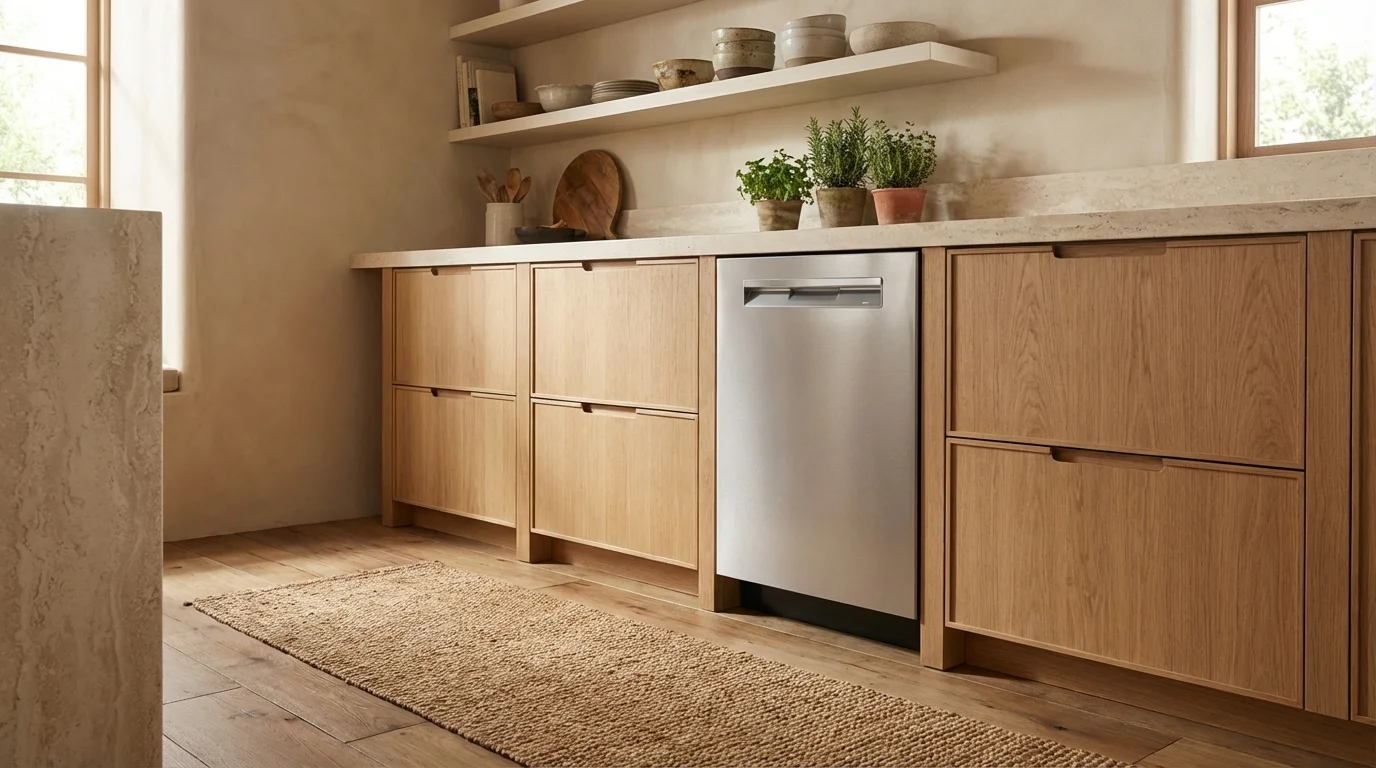
Bosch makes the quietest dishwashers in America. But with five different series and a dozen confusing feature names, picking the right one feels harder than it should be. We tested five models and published dedicated reviews on each to cut through the marketing speak. This guide breaks down exactly what you get at each price point, explains all that CrystalDry and AutoAir jargon in plain English, and helps you find the right Bosch for your kitchen.
The Quick Answer: Our Top Picks
For those who just want a quick recommendation, here are our picks after testing five Bosch dishwashers:
|
Category
|
Model
|
Price
|
Noise
|
Drying
|
Why We Picked It
|
|---|---|---|---|---|---|
|
Best Overall
|
$1,249
|
42 dB
|
CrystalDry
|
Premium features at $550 less than Benchmark
|
|
|
Best Budget
|
$569
|
48 dB
|
PureDry
|
Real Bosch quality under $600
|
|
|
Best Value
|
$999
|
44 dB
|
AutoAir
|
$100 less than 300 Series with better features
|
|
|
Quietest
|
$1,799
|
38 dB
|
CrystalDry
|
Library quiet for open floor plans
|
|
|
Also Great
|
$1,349
|
42 dB
|
CrystalDry
|
Same as Best Overall with bar handle
|
All five models are currently $160-$250 off their regular prices through February 2026.
Why Choose Bosch?
Bosch has earned its reputation as the quietest dishwasher brand in the United States. While many competitors run at 50 dB or louder, Bosch models range from 38 to 48 dB. That difference is noticeable. At 48 dB, you can still have a normal conversation in the kitchen. At 38 dB, you might forget the dishwasher is running at all.
Every Bosch dishwasher comes with a stainless steel tub, even the entry-level 100 Series at $569. Many budget competitors use plastic tubs that can stain, retain odors, and wear out faster. The stainless steel construction also helps with drying since the metal cools faster and draws moisture away from dishes.
Bosch also pioneered several drying technologies we will explain later: PureDry, AutoAir, and CrystalDry. The company includes AquaStop leak protection on every model, which monitors for leaks 24 hours a day and automatically shuts off water flow if something goes wrong. In our testing, these are genuinely useful features rather than marketing fluff.
The main trade-off is price. Bosch dishwashers cost more than most American brands, and the cycles run longer (typically 2-3 hours). But for quiet operation, build quality, and drying performance, Bosch consistently outperforms the competition. If you’re weighing Bosch against other premium brands, our Miele vs Bosch dishwashers comparison breaks down how these two German engineering leaders stack up.
Which Bosch Is Right for You?
Here is a simple framework to help you decide:
- If your budget is tight: Get the 100 Series at $569. It has the core Bosch quality at the lowest price.
- If you want the best value: Get the 500 Series at $999. It now costs $100 less than the 300 Series while adding AutoAir drying, WiFi, and a flexible 3rd rack.
- If you want the best overall experience: Get the 800 Series SHP78CM5N at $1,249. CrystalDry actually gets plastics dry, and 42 dB is barely audible.
- If silence is everything: Get the Benchmark at $1,799. The 38 dB operation is genuinely library quiet.
- If you prefer bar handles over pocket handles: Get the 800 Series SHX78CM5N at $1,349. Same performance as our top pick with a traditional handle design.
The key decision point is around $999-$1,099. The 500 Series now costs $100 less than the 300 Series while offering more features in every category. We will explain why in detail below.
Best Overall: Bosch 800 Series SHP78CM5N
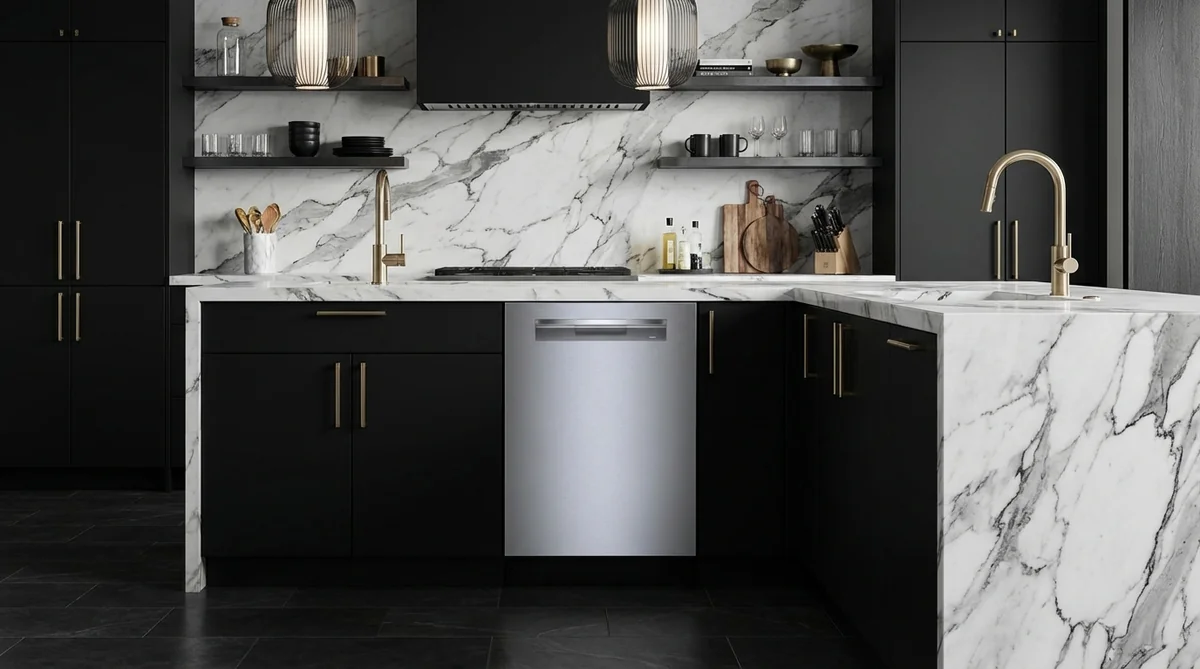
Price: $1,249 (regularly $1,449, save $200)
The Bosch 800 Series SHP78CM5N is our top pick for most households. It delivers about 80% of what the Benchmark offers at 30% less cost. For a deep dive into this model, see our full Bosch SHP78CM5N review.
At 42 dB, this dishwasher is genuinely quiet. In our warehouse testing, we could stand next to it and carry on a normal conversation without raising our voices. The TimeLight feature projects the remaining cycle time onto the floor, which is useful since the machine is so quiet you might otherwise wonder if it is still running.
The star feature is CrystalDry technology. Unlike basic condensation drying, CrystalDry uses zeolite minerals that absorb moisture and convert it to heat up to 176 degrees Fahrenheit. Bosch claims dishes come out 60% drier than with standard drying, and in our tests, even plastic containers came out ready to put away. This is a meaningful upgrade over PureDry and AutoAir.
Other notable features include PrecisionWash with PowerControl spray arms that detect soil levels and adjust water pressure, a flexible 3rd rack with adjustable tines for loading awkward items, RackMatic adjustable middle rack with nine positions, and EasyGlide ball-bearing rack rails that glide smoothly even when fully loaded.
What We Love
CrystalDry drying technology makes a real difference. Plastics, Tupperware, and water bottles actually come out dry. The 42 dB operation is quiet enough to run during dinner parties or while watching television. TimeLight projects cycle status on the floor, which helps since you cannot hear the machine running. The EasyGlide rails make loading and unloading feel premium.
What Could Be Better
Cycles run 2-3 hours on normal settings. There is no interior light, which the Benchmark has. This model costs $250 more than the 500 Series, and if you do not wash many plastics, that upgrade may not be worth it. WiFi features require the Home Connect app, which can be finicky to set up on some Android phones.
Who Should Buy This
The 800 Series SHP78CM5N is ideal for households frustrated with wet dishes, especially plastic containers. Open floor plan kitchens benefit from the quiet operation. Anyone who wants premium features without paying Benchmark prices will find this model hits the sweet spot.
Best Budget: Bosch 100 Series SHE41CM5N
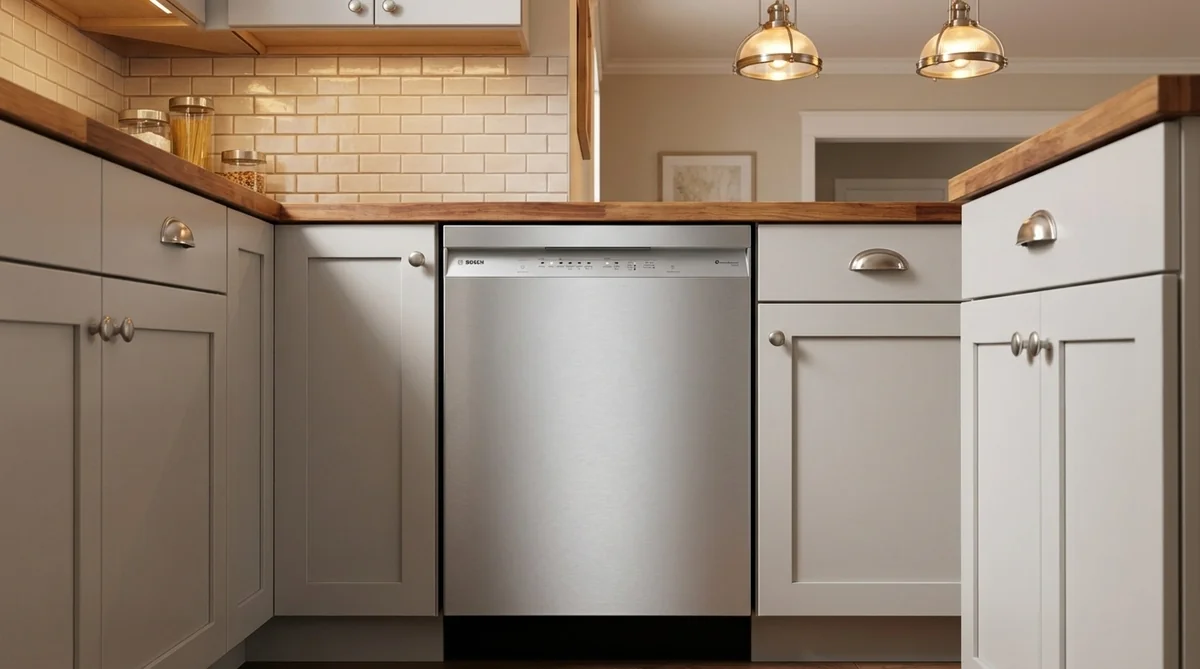
Price: $569 (regularly $729, save $160)
The Bosch 100 Series SHE41CM5N proves that entry-level Bosch is still Bosch. At $569, it costs less than many competitors while offering genuine German engineering and a stainless steel tub. Read our complete Bosch 100 Series dishwasher review for the full breakdown.
At 48 dB, this is the loudest dishwasher in our lineup. But 48 dB is still quieter than most competing brands that run at 50 dB or higher. You will notice it running, but it will not dominate the room.
The 100 Series uses PureDry condensation drying. The residual heat from the wash cycle causes moisture to condense on the stainless steel walls and drain away. This works well for ceramics and glassware, but plastics will come out with water droplets. Every Bosch dishwasher passes 485 quality checks before leaving the factory, including running each unit with water.
This model has a front control panel with visible buttons rather than the top controls found on higher series. Some people prefer seeing the buttons, while others want the cleaner look of top controls. The anti-fingerprint stainless steel finish helps keep the exterior looking clean.
What We Love
At $569, you get genuine Bosch quality at an accessible price. The stainless steel tub beats plastic tubs found in most budget competitors. Even at 48 dB, this model runs quieter than most dishwashers under $700. PrecisionWash sensors adjust cleaning power based on soil levels. AquaStop leak protection comes standard.
What Could Be Better
PureDry leaves plastics wet. There is no 3rd rack for extra loading flexibility. No WiFi connectivity or smart features are included. The front control design is less sleek than top control models. You only get 12 place settings versus 16 on higher models.
Who Should Buy This
Budget-conscious buyers who refuse to compromise on brand quality will appreciate the 100 Series. This model works well for rental properties, starter homes, or guest houses. Households that mainly wash glass and ceramic dishes will not miss the advanced drying technology. Anyone who prefers visible front controls may actually like this design better.
Best Value: Bosch 500 Series SHP65DM5N
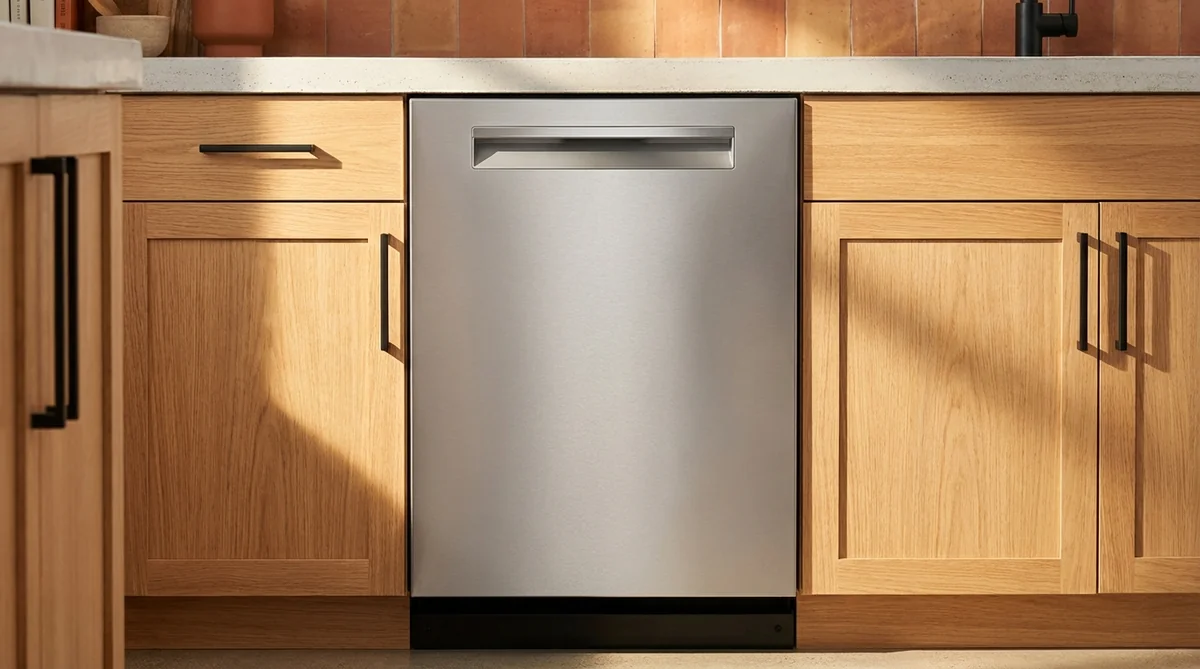
Price: $999 (regularly $1,249, save $250)
The Bosch 500 Series SHP65DM5N earns our Best Value pick because it delivers features that used to be premium-only at a mid-range price. Our Bosch 500 Series dishwasher review covers everything in detail.
This is where things get interesting. The 500 Series now costs $999 while the 300 Series sits at $1,099. For less money, the 500 Series is the clear winner.
Why the 500 Series Beats the 300 Series
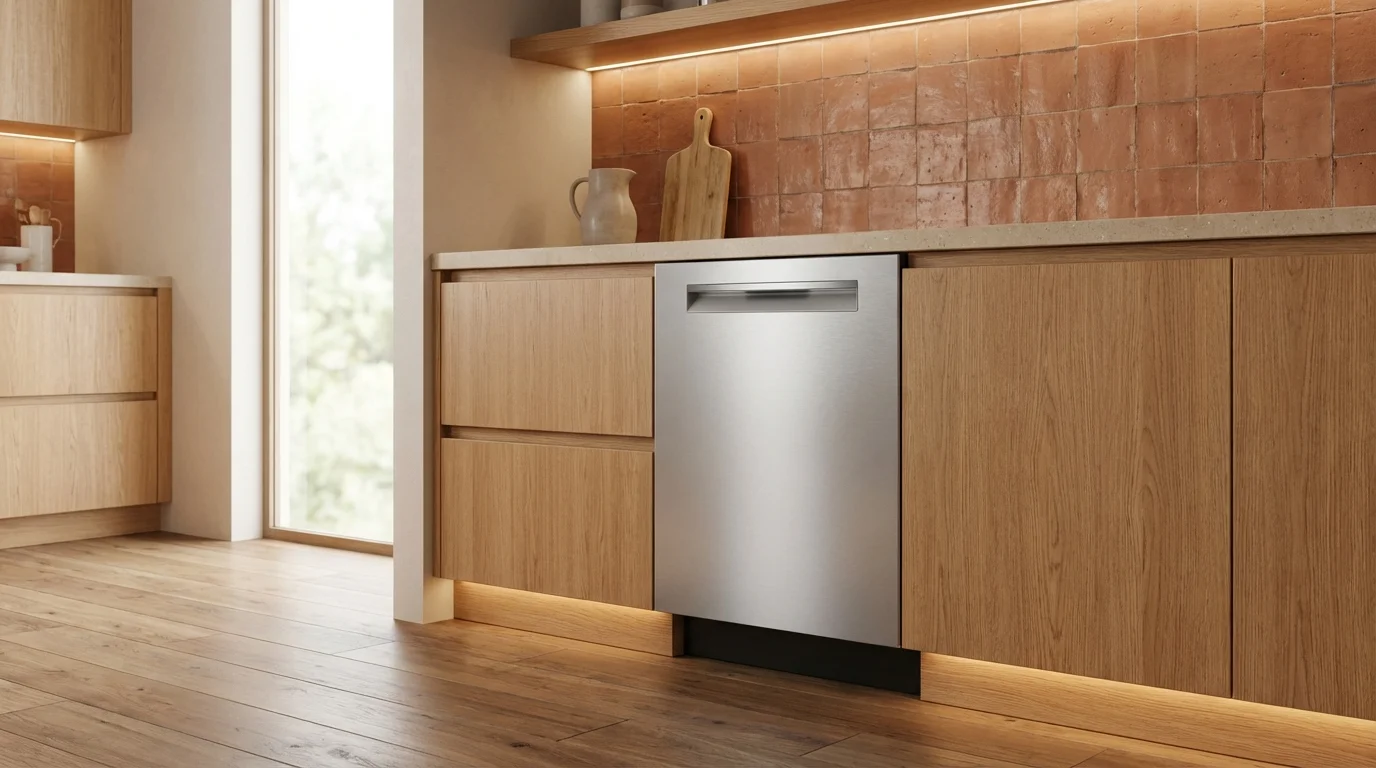
At $100 less than the 300 Series, the 500 Series gives you:
- AutoAir drying instead of basic PureDry (door pops open to release steam)
- WiFi connectivity with Home Connect app (300 Series has no WiFi)
- Flexible 3rd rack with adjustable wings (300 Series has basic 3rd rack)
- FlexSpace tines that fold for bulky items
- InfoLight floor projection showing cycle status
- 44 dB operation versus 46 dB on the 300 Series
There is no reason to choose the 300 Series when the 500 Series costs less and includes all these extras. We include the 300 Series SGE53C55UC in our comparison table for completeness, but our recommendation is always the 500 Series at this price point.
What We Love
AutoAir drying automatically pops the door open at cycle end to let steam escape and fresh air circulate. Bosch claims 40% drier dishes compared to keeping the door closed. WiFi connectivity at this price point is unusual since most brands reserve smart features for premium models. The flexible 3rd rack has expanding wings that lower to fit deeper items. At 44 dB, this runs 2 dB quieter than the 300 Series.
What Could Be Better
AutoAir is better than PureDry but still not as effective as CrystalDry for plastics. Some water spots may remain on plastic items. The InfoLight only shows a red dot, not the remaining time like TimeLight on the 800 Series. For $250 more, you can step up to the 800 Series with CrystalDry. The EasyGlide rack rails on this model are standard rather than ball-bearing.
Who Should Buy This
Value seekers who want more than basic features without paying premium prices will appreciate the 500 Series. Smart home enthusiasts who want WiFi connectivity at a reasonable price should consider this model. Anyone upgrading from an older dishwasher will notice real improvements. Those who considered the 300 Series should save $100 and get this better-equipped model instead.
Quietest: Bosch Benchmark SHP9PCM5N
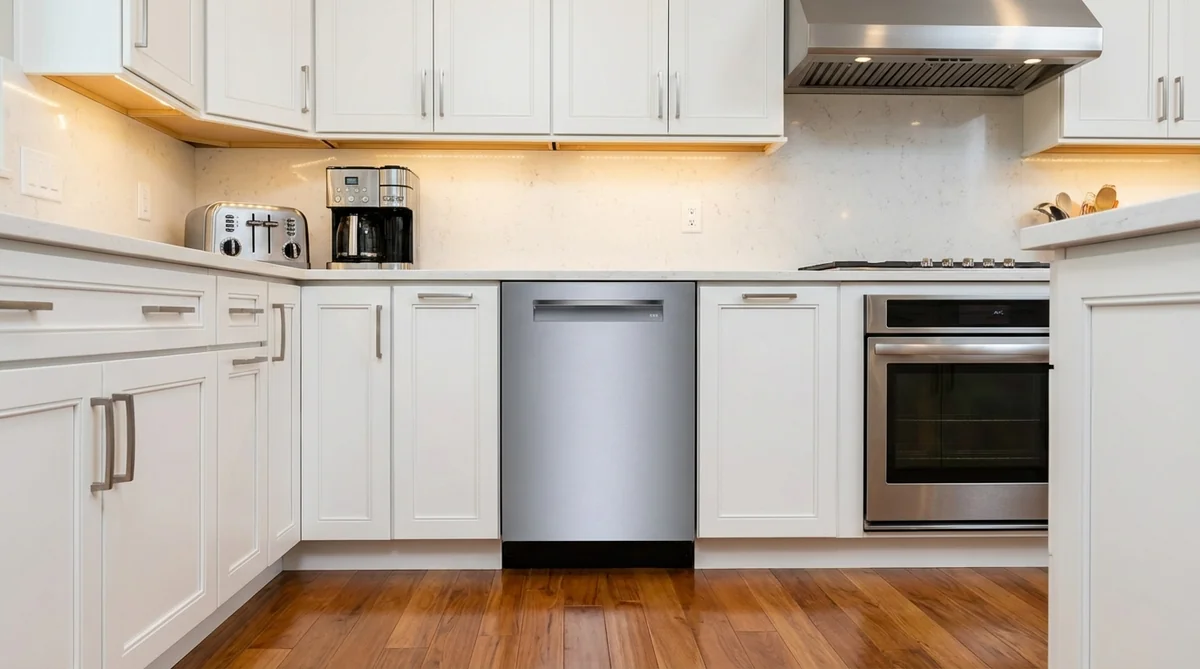
Price: $1,799 (regularly $1,999, save $200)
The Bosch Benchmark SHP9PCM5N is the quietest dishwasher you can buy. At 38 dB, it operates at library-quiet levels. Our Bosch Benchmark SHP9PCM5N review explores whether the premium is worth it.
The 4 dB difference between the Benchmark (38 dB) and 800 Series (42 dB) might not sound like much, but decibels are logarithmic. Every 3 dB represents a doubling of sound intensity. In practice, the Benchmark is noticeably quieter than the already-quiet 800 Series.
The Benchmark includes everything from the 800 Series plus a few exclusive features. The interior light illuminates the tub when you open the door, making loading easier in dim kitchens. The EasyGlide Plus rack system uses premium ball-bearing wheels for an even smoother glide. A built-in water softener removes hard water spots.
Like the 800 Series, the Benchmark uses CrystalDry technology with zeolite minerals for superior drying. Plastics come out dry and ready to put away. All the same premium features are here: PrecisionWash, RackMatic, flexible 3rd rack, WiFi connectivity, and TimeLight.
What We Love
At 38 dB, this is genuinely library quiet. You can run it during dinner parties, movie nights, or podcast recordings without interference. Interior lighting is exclusive to the Benchmark and genuinely useful. CrystalDry delivers the same excellent drying as the 800 Series. The water softener helps in areas with hard water.
What Could Be Better
The Benchmark costs $550 more than the 800 Series. For most households, that premium only buys you 4 dB quieter operation and interior lighting. The same 2-3 hour cycles apply. If you do not need absolute silence, the 800 Series offers 90% of the experience at a much lower price. The extra quiet adds diminishing returns for typical households.
Who Should Buy This
Open concept kitchens where the dishwasher is visible and audible from living spaces benefit most from the ultra-quiet operation. Home offices adjacent to the kitchen where noise is distracting justify the premium. Anyone who runs the dishwasher during evening activities like watching television or hosting guests will appreciate the silence. Households where someone sleeps near the kitchen can run it at any hour.
Also Great: Bosch 800 Series SHX78CM5N (Bar Handle)
Price: $1,349 (regularly $1,549, save $200)
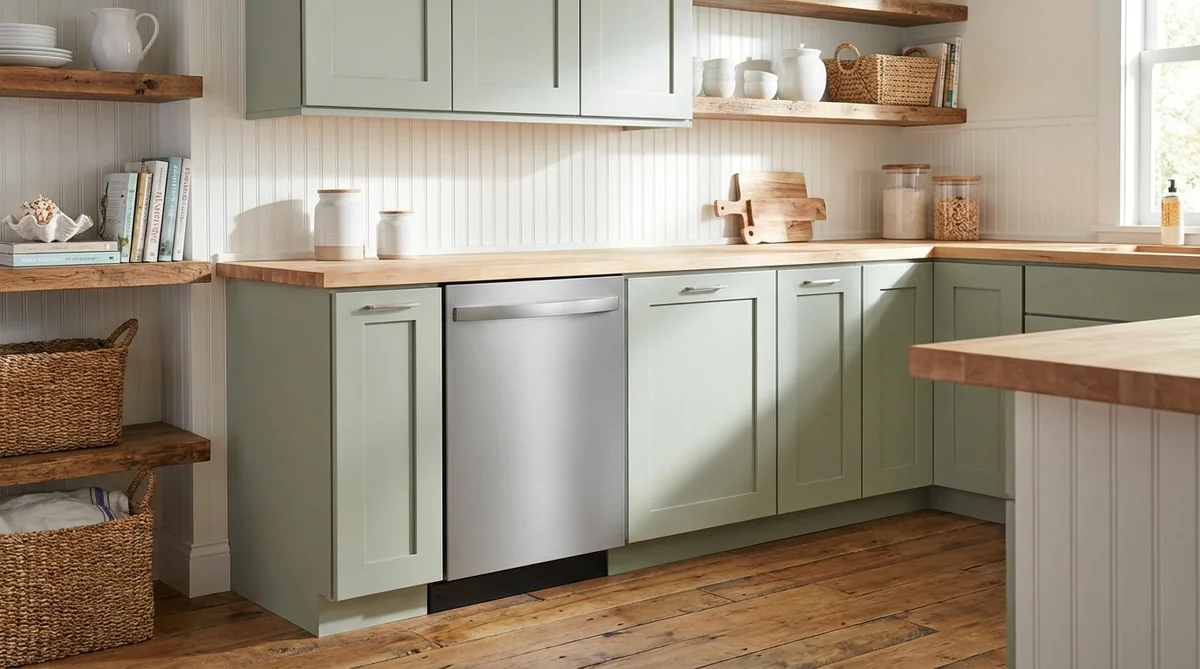
The Bosch 800 Series SHX78CM5N is identical to our Best Overall pick except for one difference: the handle. While the SHP78CM5N has a pocket handle that sits flush with the door, the SHX78CM5N has a traditional bar handle that protrudes. Our Bosch SHX78CM5N review has the complete comparison.
Same 42 dB quiet operation. Same CrystalDry drying technology. Same TimeLight, EasyGlide rails, RackMatic, and flexible 3rd rack. Same WiFi connectivity. The only differences are the handle style and the $100 higher price.
Bar Handle vs Pocket Handle
The pocket handle creates a modern, integrated look where the dishwasher blends into cabinetry. The bar handle is more traditional and can be easier to grip, especially with wet or slippery hands. Performance is identical between both models. Choose based on your kitchen aesthetic and personal preference.
If you have a modern kitchen with flat-panel cabinets, the pocket handle usually looks better. Traditional kitchens with raised-panel cabinets or visible hardware often pair better with the bar handle. The $100 difference is purely for the handle design.
A Note on the 300 Series
The Bosch 300 Series SGE53C55UC sits at $1,099. It offers PureDry condensation drying, a basic 3rd rack, RackMatic adjustable middle rack, 46 dB operation, and front controls.
However, since the 500 Series costs $100 less at $999 and adds AutoAir drying, WiFi, a flexible 3rd rack, FlexSpace tines, InfoLight, and quieter 44 dB operation, we recommend the 500 Series instead. The 300 Series is included in our comparison for completeness, but it represents poor value at its current price.
Bosch Features Explained: A Jargon-Free Guide
Bosch uses a lot of proprietary feature names that can be confusing. Here is what they actually mean:
Drying Technologies
PureDry (100 and 300 Series): This is condensation drying. After the hot wash cycle, moisture condenses on the cooler stainless steel walls and drains away. It works well for glass and ceramics but leaves water droplets on plastics. There is no heating element, so plastics are safe anywhere in the machine.
AutoAir (500 Series): The door automatically pops open at the end of the cycle to release steam and let fresh air circulate. Bosch claims 40% drier dishes compared to keeping the door closed. This is better than PureDry but still not perfect on plastics.
CrystalDry (800 Series and Benchmark): Natural zeolite minerals absorb moisture and convert it to heat up to 176 degrees Fahrenheit. This is Bosch’s most advanced drying technology and actually gets plastics dry. Bosch claims 60% drier dishes compared to PureDry. The zeolite minerals regenerate during each wash cycle and last the life of the machine.
Cleaning Features
PrecisionWash: Sensors detect the soil level of your dishes and adjust water pressure and spray patterns automatically. Available on all series. The PowerControl version on 800 Series adds a dedicated spray zone for heavily soiled items on the bottom rack.
AquaStop: A 24/7 leak detection system with sensors that automatically close the water inlet and activate the drain pump if a leak is detected. Standard on all Bosch dishwashers.
Rack Features
RackMatic: The middle rack adjusts to three different heights with nine total positions. This lets you fit tall stemware in the middle rack while leaving room for pots and pans below. Available on 300 Series and up.
EasyGlide: Smooth rack rails that pull easily even when fully loaded. Standard EasyGlide uses quality rollers. Premium EasyGlide Plus (Benchmark only) uses ball-bearing wheels.
FlexSpace: Fold-down tines in the lower rack that create space for large pots and pans. Available on 500 Series and up.
3rd Rack: An extra rack at the top for utensils, lids, and small items. The basic version (300 Series) is fixed. The flexible version (500 Series and up) has adjustable wings that lower to fit deeper items like ladles or measuring cups.
Display Features
InfoLight: A red dot projected on the floor that indicates the cycle is running. Useful since the machines are so quiet you cannot hear them. Available on 500 Series and up.
TimeLight: Projects the remaining cycle time on the floor. More useful than InfoLight since you know exactly when dishes will be done. Available on 800 Series and up.
What You Get at Each Series
Here is a clear breakdown of what each Bosch series offers:
|
Feature
|
100 Series ($569)
|
300 Series ($1,099)
|
500 Series ($999)
|
800 Series ($1,249-$1,349)
|
Benchmark ($1,799)
|
|---|---|---|---|---|---|
|
Noise
|
48 dB
|
46 dB
|
44 dB
|
42 dB
|
38 dB
|
|
Drying
|
PureDry
|
PureDry
|
AutoAir
|
CrystalDry
|
CrystalDry
|
|
3rd Rack
|
No
|
Basic
|
Flexible
|
Flexible
|
Flexible
|
|
RackMatic
|
No
|
Yes
|
Yes
|
Yes
|
Yes
|
|
WiFi
|
Yes
|
No
|
Yes
|
Yes
|
Yes
|
|
Floor Light
|
No
|
No
|
InfoLight
|
TimeLight
|
TimeLight
|
|
EasyGlide
|
No
|
No
|
Standard
|
Premium
|
Premium Plus
|
|
FlexSpace
|
No
|
No
|
Yes
|
Yes
|
Yes
|
|
Interior Light
|
No
|
No
|
No
|
No
|
Yes
|
|
Place Settings
|
12
|
16
|
16
|
16
|
16
|
|
Controls
|
Front
|
Front
|
Top
|
Top
|
Top
|
100 Series ($569): Core Bosch quality at entry-level price. Gets dishes clean, reasonably quiet at 48 dB, basic PureDry drying. Best for budget-conscious buyers.
300 Series ($1,099): Adds RackMatic and a basic 3rd rack, drops to 46 dB. But still has PureDry and no WiFi. Skip this since 500 Series costs less with more features.
500 Series ($999): The value sweet spot. AutoAir drying, WiFi, flexible 3rd rack, 44 dB operation. $100 less than 300 Series and much better equipped.
800 Series ($1,249-$1,349): CrystalDry actually dries plastics. Near-silent 42 dB operation. TimeLight shows remaining time. Premium feel and performance. Our top pick.
Benchmark ($1,799): Everything from 800 Series plus 38 dB ultra-quiet operation and interior lighting. Only worth the premium if silence is your top priority.
Will It Actually Dry My Dishes?
Drying performance is the number one complaint about dishwashers. Bosch approaches this differently than most brands by using condensation-based drying rather than a heated dry element. Here is what that means for you.
PureDry (100 and 300 Series)
PureDry relies on residual heat from the wash cycle. Hot dishes release moisture, which condenses on the cooler stainless steel walls and drains away. This is energy efficient and works well for glass, ceramics, and metal dishes.
The problem is plastics. Plastic does not hold heat as well as glass or ceramic, so it cools quickly and moisture re-condenses on the surface. If you wash a lot of plastic containers, lids, or water bottles, expect them to come out with water droplets.
AutoAir (500 Series)
AutoAir improves on PureDry by automatically opening the door a few inches at the end of the cycle. Steam escapes, and fresh air circulates to help dishes dry faster. Bosch claims 40% drier dishes compared to keeping the door closed.
In our testing, AutoAir made a noticeable difference. Most dishes came out dry, though plastics still had some moisture. It is a meaningful upgrade over PureDry without adding complexity.
CrystalDry (800 Series and Benchmark)
CrystalDry is Bosch’s premium drying technology. Natural zeolite minerals in a container at the bottom of the tub absorb moisture during the drying phase and convert it to heat up to 176 degrees Fahrenheit. This extra heat actually dries plastics.
In our testing, CrystalDry lived up to the hype. Plastic containers, Tupperware lids, and even water bottles came out dry and ready to put away. Bosch claims 60% drier dishes compared to PureDry, and our experience supports that claim.
If dry dishes matter to you, especially dry plastics, budget for the 800 Series. The $250 upgrade from the 500 Series to the 800 Series is worth it for CrystalDry alone.
Rinse Aid Is Basically Required
Regardless of which drying technology you choose, rinse aid makes a real difference. Rinse aid reduces surface tension so water sheets off dishes rather than forming droplets. Without it, you will see more water spots and wet dishes.
Bosch dishwashers have a built-in rinse aid dispenser. We recommend keeping it filled with a quality rinse aid like Finish or Cascade brand. Some detergent pods include rinse aid, but a dedicated dispenser usually works better.
How Quiet Is Quiet? Understanding Decibel Ratings
Dishwasher noise is measured in decibels (dB), but those numbers do not mean much without context. Here is how Bosch’s noise levels compare to real-world sounds:
|
Noise Level
|
Bosch Model(s)
|
Sounds Like
|
Practical Impact
|
|---|---|---|---|
|
38 dB
|
Benchmark
|
Quiet library, whisper
|
Barely audible in same room
|
|
42 dB
|
800 Series
|
Quiet office, soft conversation
|
Noticeable if you listen for it
|
|
44 dB
|
500 Series
|
Quiet suburb at night
|
Audible but not intrusive
|
|
46 dB
|
300 Series
|
Moderate rainfall
|
Normal conversation possible
|
|
48 dB
|
100 Series
|
Quiet conversation
|
Clearly audible but not loud
|
|
50+ dB
|
Most competitors
|
Normal conversation
|
Can interrupt activities
|
The key thing to understand is that decibels are logarithmic. Every 3 dB increase represents a doubling of sound intensity. So the 10 dB difference between the Benchmark (38 dB) and 100 Series (48 dB) is huge. The Benchmark is roughly three times quieter in perceived loudness.
That said, even the 100 Series at 48 dB is quieter than most competing dishwashers, which typically run at 50-55 dB. All Bosch dishwashers qualify as quiet by industry standards.
Whether the extra quiet is worth the premium depends on your situation. Open floor plans where the kitchen flows into living areas benefit most from ultra-quiet operation. Separate kitchens with doors can get by with louder models since you can close the door and not hear it.
What to Know Before Buying a Bosch
We genuinely recommend Bosch dishwashers, but honesty builds trust. Here are the downsides you should know about:
Cycles run 2-3 hours on normal settings. This is not a defect. Longer cycles use less water and energy to achieve the same clean. If you need dishes faster, use the Express or Speed60 cycle, which runs about an hour but uses more resources and may not clean as thoroughly.
Rinse aid is basically required. Bosch’s condensation-based drying works best with rinse aid. Without it, expect more water spots and wet dishes. Plan to buy rinse aid and refill the dispenser regularly.
No heated dry option. Unlike some American brands, Bosch does not use a heating element for drying. This means plastics are always safe on the bottom rack, but lower-tier models (100/300 Series) will leave plastics wet. If you wash a lot of plastics, budget for CrystalDry (800 Series or Benchmark).
PureDry leaves plastics wet. The 100 and 300 Series use basic condensation drying that works for glass and ceramics but not plastics. If you wash a lot of Tupperware and water bottles, you will need to towel-dry them or upgrade to AutoAir or CrystalDry.
Premium pricing compared to American brands. Bosch dishwashers cost more than comparable models from GE, Whirlpool, or Maytag. You are paying for quieter operation, better drying technology, stainless steel tubs, and German engineering. Whether that premium is worth it depends on your priorities.
Repair parts can be expensive. Bosch uses high-quality components, which means fewer repairs over the machine’s life. But when something does need replacing, parts tend to cost more than domestic brands. Extended warranties are worth considering.
These are trade-offs, not deal-breakers. For most households, the benefits outweigh these downsides. But you should know what you are getting into before spending $569 to $1,799.
Full Comparison: All 6 Models Side by Side
Here is every Bosch dishwasher we evaluated in one comprehensive table:
|
Model
|
Series
|
Price
|
MSRP
|
Savings
|
Noise
|
Drying
|
Handle
|
WiFi
|
3rd Rack
|
Our Take
|
|---|---|---|---|---|---|---|---|---|---|---|
|
100
|
$569
|
$729
|
$160
|
48 dB
|
PureDry
|
Front
|
Yes
|
No
|
Best Budget
|
|
|
300
|
$1,099
|
$1,099
|
$0
|
46 dB
|
PureDry
|
Front
|
No
|
Basic
|
Skip for 500
|
|
|
500
|
$999
|
$1,249
|
$250
|
44 dB
|
AutoAir
|
Pocket
|
Yes
|
Flexible
|
Best Value
|
|
|
800
|
$1,249
|
$1,449
|
$200
|
42 dB
|
CrystalDry
|
Pocket
|
Yes
|
Flexible
|
Best Overall
|
|
|
800
|
$1,349
|
$1,549
|
$200
|
42 dB
|
CrystalDry
|
Bar
|
Yes
|
Flexible
|
Also Great
|
|
|
Benchmark
|
$1,799
|
$1,999
|
$200
|
38 dB
|
CrystalDry
|
Pocket
|
Yes
|
Flexible
|
Quietest
|
For detailed analysis of each model, see our individual reviews:
- Bosch 100 Series review
- Bosch 500 Series review
- Bosch 800 Series SHP78CM5N review
- Bosch 800 Series SHX78CM5N review
- Bosch Benchmark SHP9PCM5N review
Frequently Asked Questions
Is Bosch worth the extra money?
For quiet operation and drying performance, yes. Bosch dishwashers run at 38-48 dB while most competitors are 50+ dB. That difference is noticeable in open floor plans. The stainless steel tubs, CrystalDry technology (on 800 Series and up), and German engineering quality justify the premium for most households. If you just need basic cleaning and noise is not a concern, budget brands work fine.
Which Bosch series is best for the money?
The 500 Series at $999 offers the best value. It includes AutoAir drying, WiFi connectivity, a flexible 3rd rack, and 44 dB quiet operation. For the best overall experience, step up to the 800 Series at $1,249 for CrystalDry technology that actually dries plastics.
Why are Bosch dishwasher cycles so long?
Longer cycles use less water and energy to achieve the same level of clean. A 2-3 hour cycle at lower temperatures with less water is more efficient than a 1-hour cycle blasting hot water. If you need dishes faster, use the Express or Speed60 cycle, but expect slightly less thorough cleaning and higher resource usage.
Do I need rinse aid with a Bosch?
Basically yes. Bosch uses condensation-based drying rather than a heating element. Rinse aid reduces surface tension so water sheets off dishes rather than forming droplets. Without rinse aid, expect more water spots and wet dishes. The built-in dispenser should be refilled regularly with a quality rinse aid like Finish or Cascade.
What is the difference between 300 and 500 Series?
The 500 Series at $999 is clearly better than the 300 Series at $1,099. It adds AutoAir drying (door pops open automatically), WiFi connectivity, a flexible 3rd rack with adjustable wings, FlexSpace fold-down tines, InfoLight floor projection, and quieter 44 dB operation (vs 46 dB on 300 Series). Always choose the 500 Series — it costs less and delivers more.
Is CrystalDry worth the upgrade?
If you wash plastics and want them dry, yes. CrystalDry uses zeolite minerals that absorb moisture and convert it to heat up to 176 degrees Fahrenheit. Unlike PureDry and AutoAir, CrystalDry actually gets plastic containers, Tupperware, and water bottles dry. The $250 upgrade from 500 Series to 800 Series is worth it for households frustrated by wet plastics.
How loud is 42 dB really?
At 42 dB, the 800 Series is comparable to a quiet office or soft conversation. You can hear it if you listen for it, but it will not interrupt conversation or television watching. For reference, 50 dB is normal conversation volume, and most competing dishwashers run at 50-55 dB. The 800 Series is noticeably quieter than typical dishwashers.
Bar handle or pocket handle?
Performance is identical between the bar handle (SHX78CM5N at $1,349) and pocket handle (SHP78CM5N at $1,249) versions of the 800 Series. The pocket handle creates a modern, flush look that blends with cabinetry. The bar handle is more traditional and easier to grip with wet hands. Choose based on your kitchen aesthetic. The $100 difference is purely for the handle design.
Final Verdict
After testing five Bosch dishwashers and publishing dedicated reviews on each, the Bosch 800 Series SHP78CM5N at $1,249 is our top pick for most households. CrystalDry technology solves the wet plastics problem, 42 dB operation is genuinely quiet, and you get premium features at $550 less than the Benchmark.
For budget buyers, the 100 Series SHE41CM5N at $569 delivers real Bosch quality at an accessible price. Value seekers should get the 500 Series SHP65DM5N at $999 since it beats the 300 Series at a lower price. And if absolute silence matters most, the Benchmark SHP9PCM5N at $1,799 delivers library-quiet 38 dB operation.
All five recommended models are currently $160-$250 off through February 2026. This January-February promotion brings our top pick down from $1,449 to $1,249 and makes the 100 Series available at just $569. If you have been waiting for a good time to buy a Bosch dishwasher, this is it.
If you’re also considering other premium dishwasher brands, check out our best Thermador dishwashers roundup, or explore our guide to best KitchenAid dishwashers for American-made alternatives. For space-conscious buyers, our best small dishwashers guide covers compact options from multiple brands.