

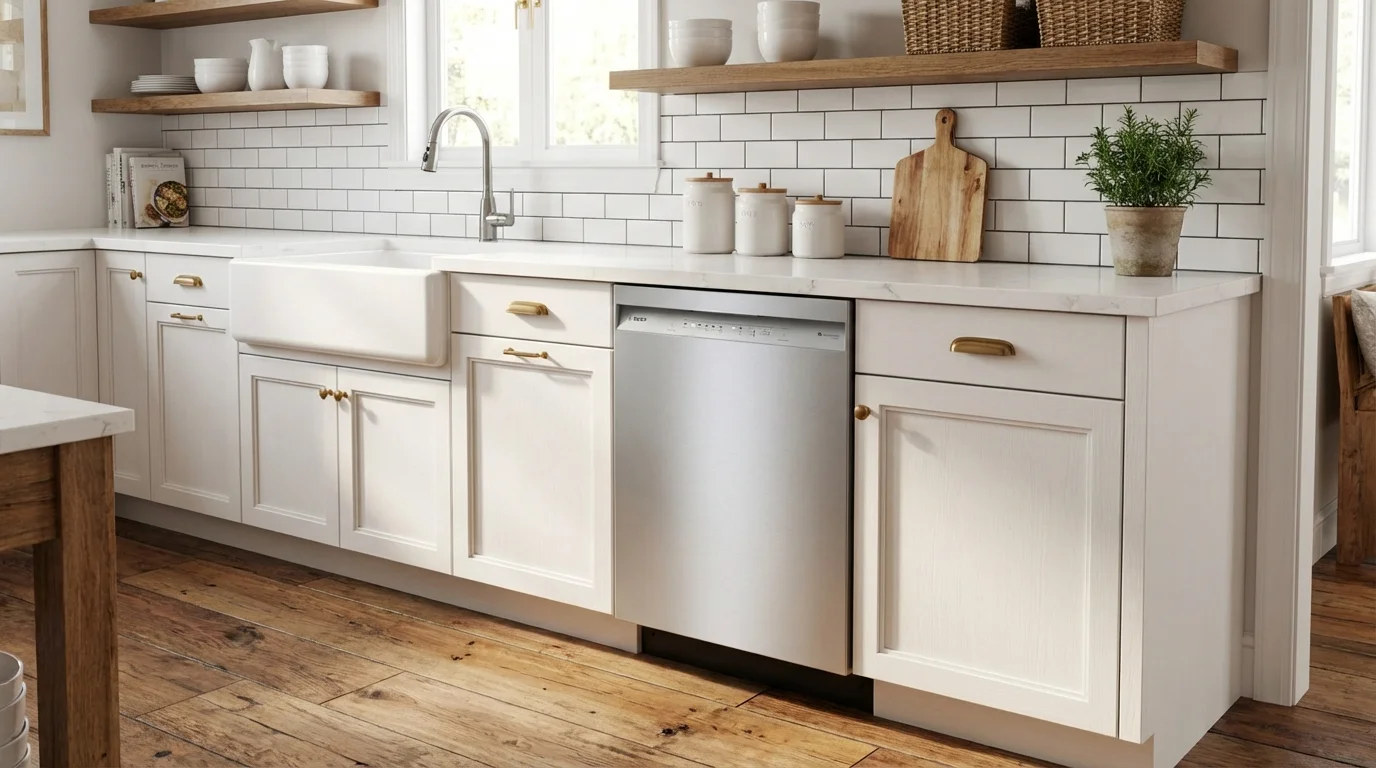
Can real Bosch quality fit a tighter budget? The Bosch 100 Series SHE41CM5N proves it can, delivering the quiet operation and reliability Bosch is known for at the lowest price in their lineup. We break down the cleaning power, 48 dBA noise level, and real trade-offs to help decide if this entry-level Bosch makes sense.
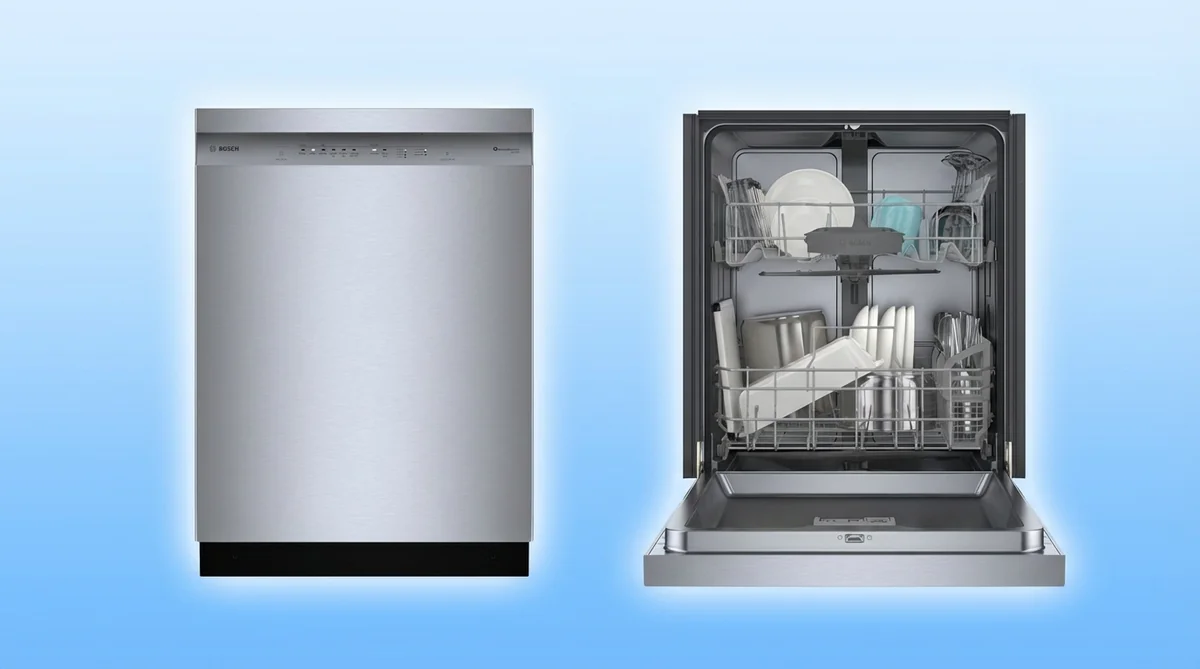
The Quick Verdict
The Bosch 100 Series SHE41CM5N earns a solid 4.4 out of 5 stars from over 1,200 customer reviews. At $569 at Masters Wholesale, it offers genuine Bosch engineering at 22% off the $729 MSRP.
Best for: Buyers who want quiet, reliable operation without paying $1,000+
Skip if: Excellent drying without rinse aid or a third rack are must-haves
Price and Current Deals
The Bosch 100 Series carries an MSRP of $729, but the current sale price of $569 saves $160. That 21.9% discount puts this Bosch in direct competition with mainstream brands.
For context, the GE GDT550PYRFS sells for $499 and the LG LDFN4542S runs $599. The Bosch costs $80 more than the GE but delivers much better noise control and long-term reliability. Compared to the LG, the Bosch trades a third rack for easier parts availability and Bosch’s proven service network.
The real value shows up over years of ownership. Bosch dishwashers have a 7.7% service rate according to Yale Appliance data. That means fewer repair calls, fewer headaches, and a dishwasher that likely outlasts cheaper alternatives by several years.
Key Specifications
|
Specification
|
Detail
|
|---|---|
|
Noise Level
|
48 dBA
|
|
Capacity
|
12 place settings
|
|
Wash Cycles
|
8 cycles
|
|
Tub Interior
|
Stainless steel
|
|
Control Type
|
Front control
|
|
Smart Features
|
Wi-Fi, Home Connect app
|
|
Dimensions
|
23.56″ W x 33.88″ H x 23.75″ D
|
|
Annual Energy
|
269 kWh
|
Cleaning Performance with PrecisionWash
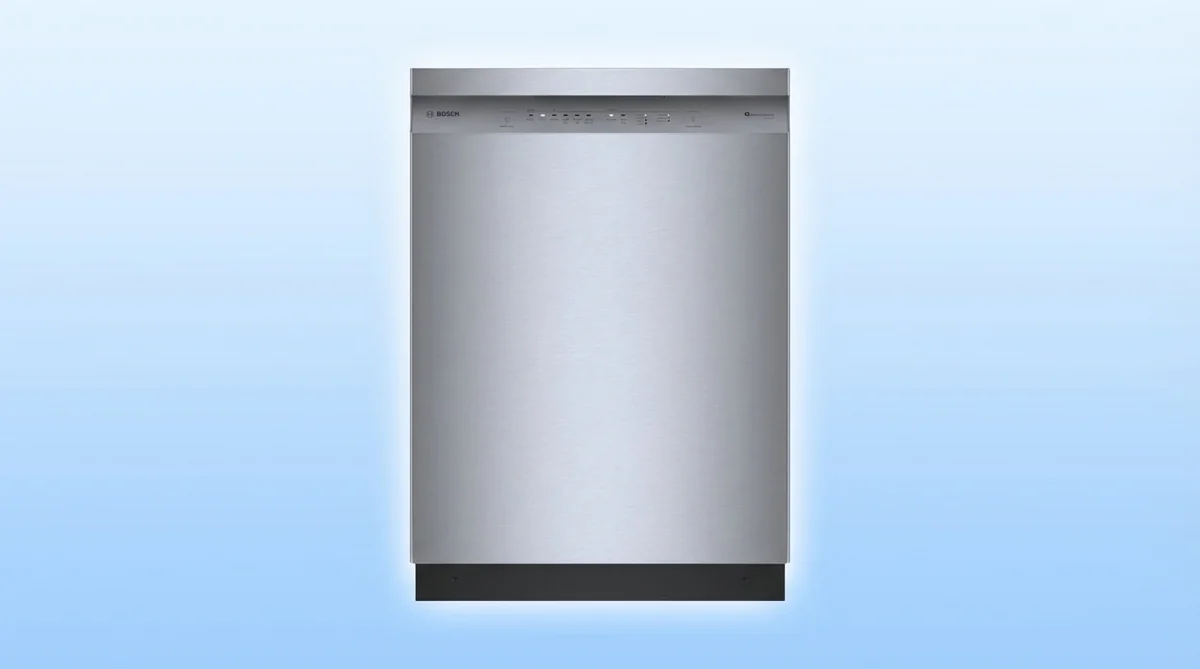
The 100 Series uses the same PrecisionWash sensor technology found in Bosch’s more expensive models. These sensors monitor soil levels throughout the wash cycle and adjust water pressure and timing based on how dirty the dishes actually are. Lighter loads get shorter cycles with less water. Heavily soiled pots get more aggressive cleaning.
In customer reviews, 70% specifically praise the cleaning results. One reviewer noted that dried oatmeal came off bowls without any pre-rinsing. That speaks to the spray arm design and water pressure Bosch engineers into even their entry-level machines.
The 8 available wash cycles cover most situations. There is a Normal cycle for everyday loads, Heavy for pots and pans, and Auto for mixed loads where the sensors do the thinking. A Sanitize option heats water to kill bacteria on baby bottles or cutting boards.
One limitation worth noting: there is no dedicated Quick Wash cycle. Customers in a hurry may find the cycle times longer than expected. The Auto cycle runs about 2 hours on average, which is typical for European-style dishwashers that prioritize thoroughness over speed.
Noise Level at 48 dBA
At 48 dBA, the Bosch 100 Series operates quieter than most dishwashers costing twice as much. Bosch calls themselves the quietest dishwasher brand in the U.S., and the numbers back it up.
To put 48 dBA in perspective, a normal conversation runs about 60 dBA. A refrigerator hums at roughly 40-45 dBA. This dishwasher falls somewhere in between, quiet enough that customers consistently report forgetting it was running.
The GE GDT550PYRFS at $499 runs at 52 dBA. That 4 dBA difference sounds small, but decibels measure on a logarithmic scale. In real-world terms, 52 dBA sounds noticeably louder than 48 dBA, especially in open floor plans where the kitchen connects to living spaces.
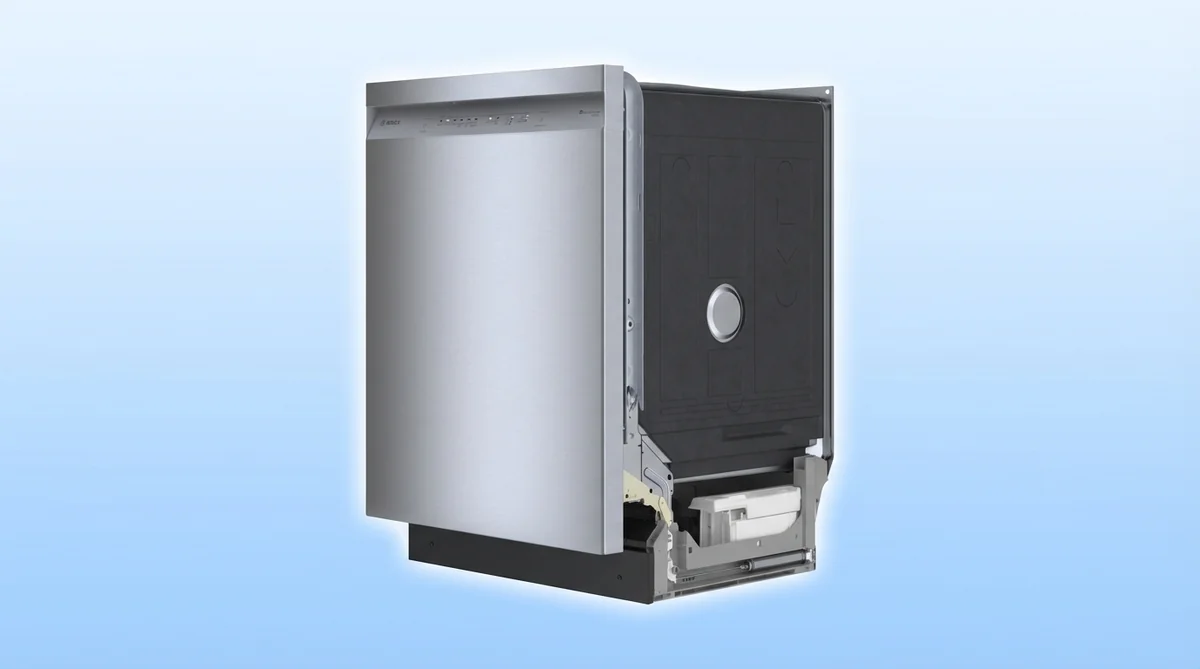
Bosch achieves this quiet operation through multiple layers of insulation, a tightly sealed door, and motors designed for low vibration. Every Bosch dishwasher runs with water at the factory before shipping as part of their 485-point quality check. This testing helps catch any noise issues before they reach customers.
For open kitchens where the dishwasher runs during family time or while watching TV, this noise difference matters more than almost any other spec.
Reliability: The Bosch Advantage
Yale Appliance tracks service calls across all the brands they sell. Based on 33,190 service calls in 2025, Bosch dishwashers required service only 7.7% of the time. The only brand with a better record is Miele at 5.6%, and Miele dishwashers cost much more.
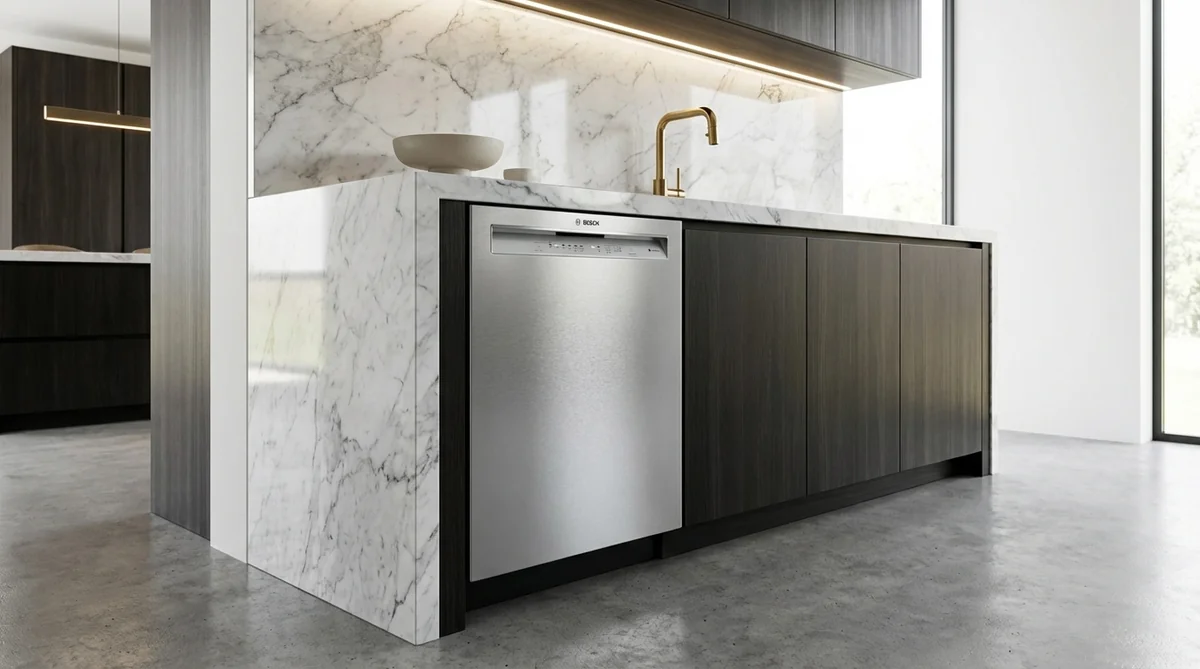
To compare, GE and GE Profile dishwashers have service rates between 8.9% and 10.3%. That means buying a GE over a Bosch roughly doubles the likelihood of needing a repair call in the first few years.
Customer reviews frequently mention long ownership experiences. Multiple owners report their previous Bosch dishwashers lasting 15+ years. While the 100 Series is a newer entry in the lineup, it benefits from the same German engineering and manufacturing standards.
The 24/7 Overflow Protection System adds another reliability layer. Even when the dishwasher is off, sensors monitor water levels. If something goes wrong, the system drains water and closes the inlet valve to prevent flooding. It is a feature we rarely see outside premium appliances.
Parts availability also matters. Bosch has an extensive service network in North America, making replacement parts easier to source than some competitors. When the LG rep visited our warehouse, even they acknowledged concerns about parts availability for their dishwashers in some regions.
The Honest Trade-Offs
No dishwasher at this price point gets everything right. The Bosch 100 Series has real limitations that matter to some buyers.
Drying Requires Rinse Aid
About 35% of customer reviews mention drying as a concern. Dishes come out clean but may have water spots or residual moisture, especially plastics.
This happens because Bosch uses condensation drying through their PureDry system rather than a traditional heating element. Steam from the hot wash cycle rises, hits the stainless steel walls, condenses, and drains away. The process works well for glass and ceramics that retain heat. Plastics cool faster and dry less completely.
The solution is simple: use rinse aid. A $10-15 bottle of rinse aid lasts months and dramatically improves drying results. Customers who add rinse aid report much better performance. Those who skip it often leave disappointed reviews about wet dishes.
Some competitors like the GE GDT550PYRFS include heated drying that works without rinse aid. The trade-off is that heat elements consume more energy and can warp plastic items placed in the wrong spot. Bosch’s condensation approach uses less electricity and makes the entire interior safe for plastics.
No Third Rack
The 100 Series comes with two racks and a cutlery holder. Higher Bosch models like the 300 Series include a third rack that adds space for utensils, lids, and small items.
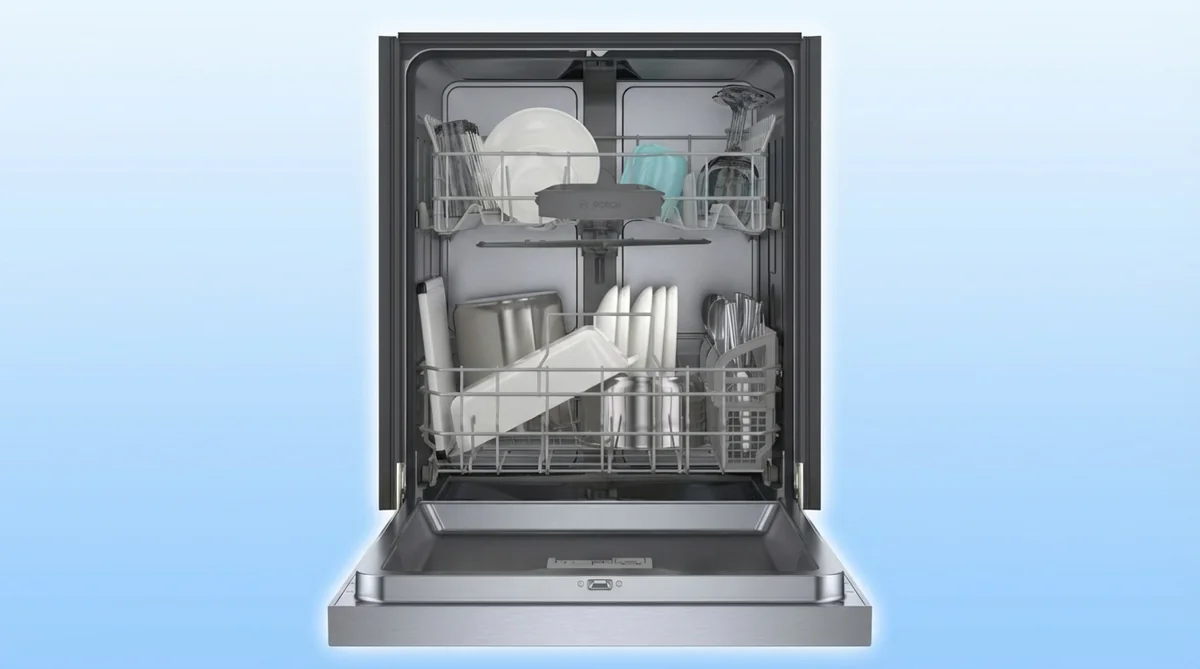
For some households, missing the third rack is a minor inconvenience. The included cutlery holder handles forks, knives, and spoons well enough. For others who regularly wash measuring cups, small lids, or have larger families generating more utensils, the third rack makes a real difference.
The Bosch 300 Series costs $100-200 more and includes the third rack along with a full stainless steel tub. For buyers who value that feature, stepping up makes sense. For those who can work around it, the 100 Series delivers the core Bosch experience at a lower price.
The racks also lack the adjustable RackMatic system found on higher models. The upper rack sits at a fixed height rather than offering three adjustable positions. Tall wine glasses or oversized bowls may require creative loading.
Compared to Similar Models
Choosing a dishwasher around $500-$600 means weighing genuine trade-offs. Each option has clear strengths and weaknesses. For a complete look at the Bosch lineup from entry-level to premium, see our best Bosch dishwashers guide.
vs GE GDT550PYRFS
The GE GDT550PYRFS costs $499 and offers 16 place settings compared to Bosch’s 12. It also includes Dry Boost heated drying that works without rinse aid. For families with larger loads or those who hate spotty glasses, the GE has appeal.
The trade-offs are real though. The GE runs at 52 dBA, noticeably louder than the Bosch. It uses a plastic tub rather than stainless steel, which can stain over time and retains odors more easily. GE’s service rate runs higher than Bosch’s as well.
Bottom line: Choose the GE for capacity and drying. Choose the Bosch for quiet and reliability.
vs LG LDFN4542S
The LG LDFN4542S costs $599 and matches the Bosch’s 48 dBA noise level while adding a third rack and QuadWash technology. On paper, it looks like a better value.
The concern with LG dishwashers is parts availability. Customers in some regions report difficulty finding replacement parts or scheduling service. LG’s service network is not as established as Bosch’s, particularly outside major metro areas.
Bottom line: Choose the LG if the third rack is essential and service availability in the area is good. Choose the Bosch for easier long-term ownership.
vs Bosch 300 Series
For $100-200 more, the Bosch 300 Series adds features missing from the 100 Series: a third rack, flexible RackMatic adjustability, and a full stainless steel tub with no plastic components.
If the budget allows, the 300 Series represents a meaningful upgrade. It keeps everything good about the 100 Series while addressing its main limitations. The cleaning, noise, and reliability remain identical because both share Bosch’s core engineering.
For buyers stretching to afford a Bosch, the 100 Series delivers 90% of the experience at a more accessible price. For those with flexibility, the 300 Series is worth the step up.
Who Should Buy the Bosch 100 Series
This dishwasher fits buyers who prioritize long-term reliability and quiet operation over flashy features. It makes sense for open floor plans where noise matters, for households tired of repairing cheap dishwashers, and for anyone who wants Bosch quality without paying $1,000+.
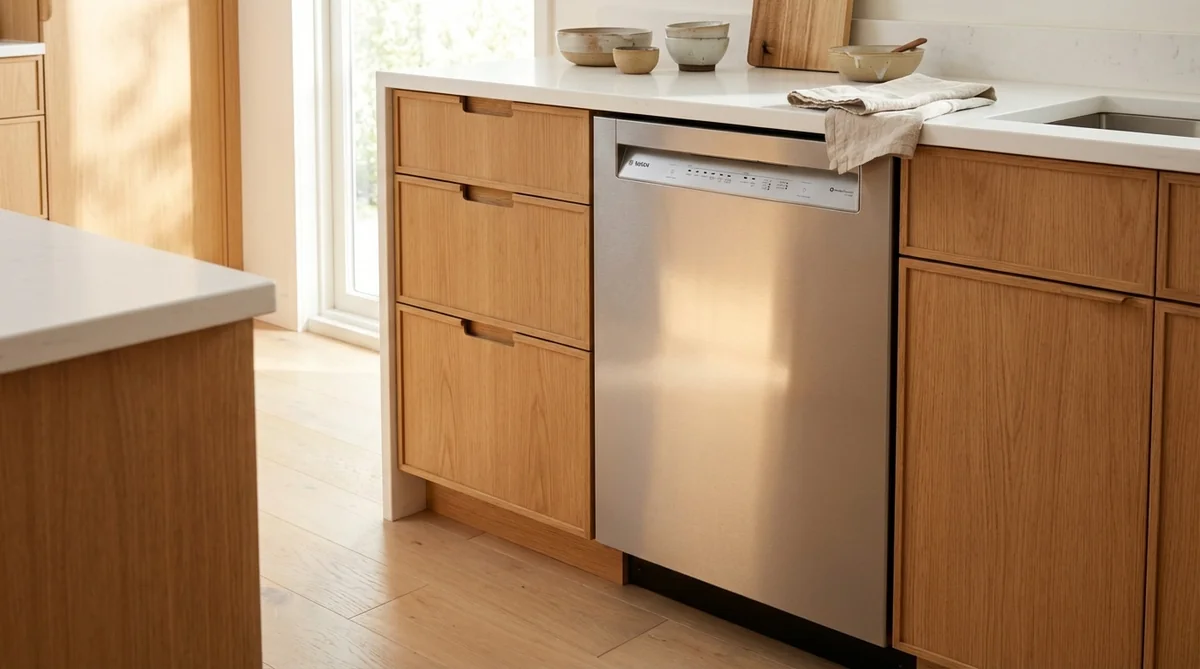
The 100 Series represents a gateway into German engineering. It is not a compromised product but rather a focused one. Bosch removed the third rack, rack adjustability, and some convenience features to hit a price point. They kept the quiet motors, reliable build quality, and proven cleaning technology.
Skip this model if drying without rinse aid is non-negotiable. Skip it if the third rack seems essential after considering loading habits honestly. In those cases, look at the GE for drying or the Bosch 300 Series for the third rack.
For everyone else, the 100 Series delivers genuine Bosch ownership at the lowest possible price.
Frequently Asked Questions
Is the Bosch 100 Series reliable?
Bosch dishwashers have a 7.7% service rate based on Yale Appliance data from over 33,000 service calls. Only Miele scores better. Customer reviews regularly report 15+ year lifespans from previous Bosch dishwashers.
How loud is the Bosch 100 Series?
The SHE41CM5N operates at 48 dBA, quiet enough that many owners forget it is running. For comparison, a normal conversation is about 60 dBA. Competitors like the GE GDT550PYRFS run at 52 dBA, noticeably louder.
Does the Bosch 100 Series dry dishes well?
Drying works well with rinse aid. Without it, dishes may have water spots or moisture, especially plastics. Bosch uses condensation drying rather than a heating element, which is more energy efficient but requires rinse aid for best results.
Is the 100 Series worth it compared to the 300 Series?
The 300 Series adds a third rack, adjustable RackMatic racks, and a full stainless steel tub for $100-200 more. If those features matter, the upgrade makes sense. If not, the 100 Series delivers the same quiet operation, cleaning power, and reliability at a lower price.
How long do Bosch dishwashers last?
Customer reviews frequently mention 15+ year lifespans. Bosch’s 7.7% service rate suggests fewer breakdowns compared to competing brands. With proper maintenance and rinse aid use, the 100 Series should provide many years of reliable service.
Final Verdict
The Bosch 100 Series SHE41CM5N proves buyers do not need to spend over $1,000 to get German engineering. At $569 at Masters Wholesale, it delivers the core Bosch promise: quiet operation at 48 dBA, reliable performance with a 7.7% service rate, and cleaning that handles dried oatmeal without pre-rinsing.
The trade-offs are manageable for most buyers. Drying works fine with a $10 bottle of rinse aid. The missing third rack matters less than expected for many households. What remains is a dishwasher built to run quietly for years without repair calls.
For budget-conscious buyers who want Bosch reliability without premium pricing, the 100 Series represents the smartest entry point into the lineup.